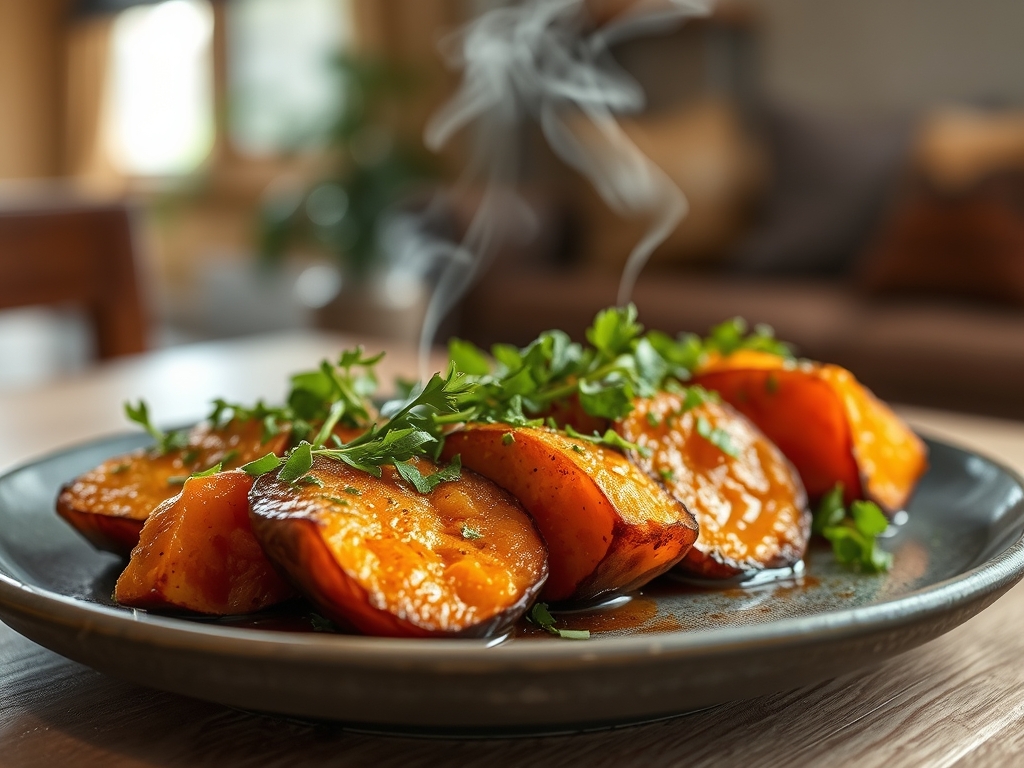
Imagine a vegetable that moonlights as a dessert but carries the nutritional weight of a superfood. That is the magic of the Hannah sweet potato. Unlike its orange cousins, the Hannah is firm, creamy, and possesses a subtle chestnut flavor that transforms your kitchen into a high end bistro. Mastering hannah sweet potato recipes requires more than just heat; it requires an understanding of starch gelatinization and the delicate balance of moisture. We are moving beyond basic mashing into a world of crispy textures and velvety interiors. This is about elevating a humble tuber into a culinary masterpiece that will have your friends asking for your secret source.
The Gathers:
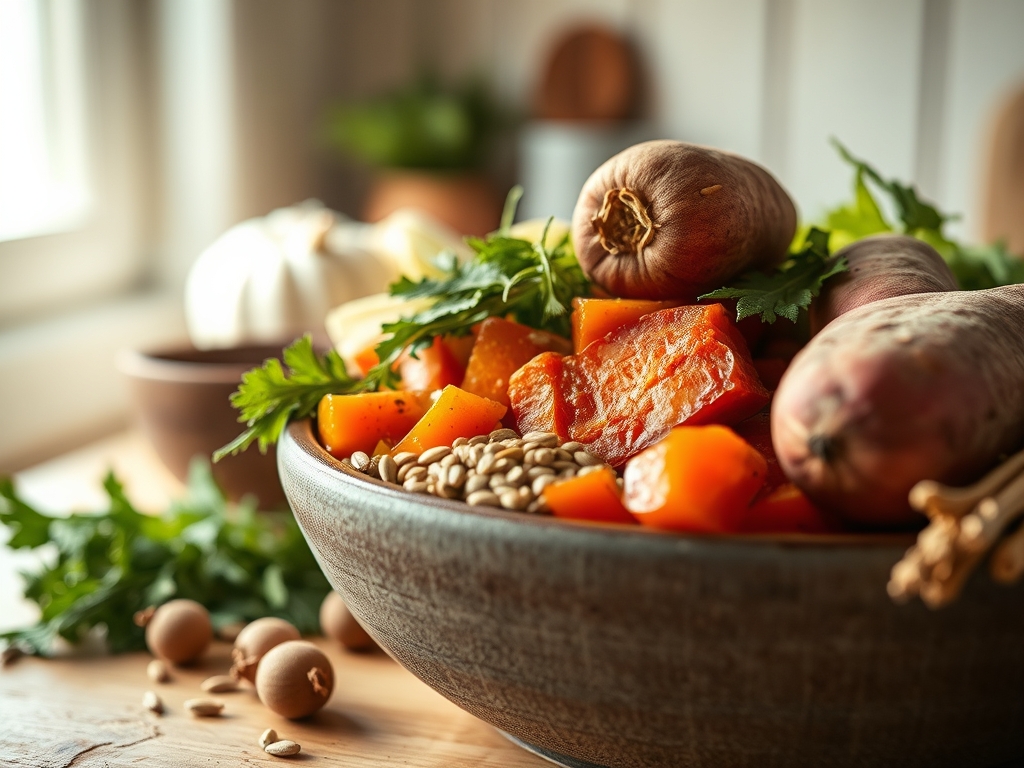
To begin our journey, we must assemble the mise en place with precision. The Hannah sweet potato is characterized by its tan skin and cream colored flesh. Because it is starchier than the Jewel or Garnet varieties, it behaves more like a Yukon Gold but with a higher sugar concentration. You will need three large Hannah sweet potatoes, approximately 800 grams if you are using a digital scale for accuracy.
For the flavor profile, gather high quality fats and aromatics. We are looking for viscous extra virgin olive oil or clarified butter to ensure a high smoke point. You will also need Maldon sea salt for its pyramidal structure, fresh rosemary to infuse the oil, and a splash of aged balsamic vinegar to provide a piquant counterpoint to the natural sugars.
Smart Substitutions: If you are avoiding dairy, substitute the butter with cold pressed coconut oil. The medium chain triglycerides in coconut oil mimic the mouthfeel of saturated dairy fats without altering the viscosity of your sauce. If rosemary feels too woody, try fresh sage leaves which render beautifully when fried in the pan drippings.
The Clock:
Efficiency in the kitchen is governed by what I call the Chef's Flow. This is the art of overlapping tasks so that no second is wasted. Your total active prep time is 15 minutes, while the thermal transformation takes 40 minutes.
Start by preheating your oven. While the air inside the cavity reaches the desired 425 degrees Fahrenheit, use your bench scraper to clear your workstation. The "Flow" dictates that you chop your aromatics while the potatoes undergo their initial rinse. By the time your heavy-bottomed skillet is screaming hot, your potatoes should be cubed and dried. This synchronization ensures that the potatoes hit the heat at the exact moment their surface moisture has evaporated, preventing the dreaded steam effect.
The Masterclass:
1. The Precision Dice
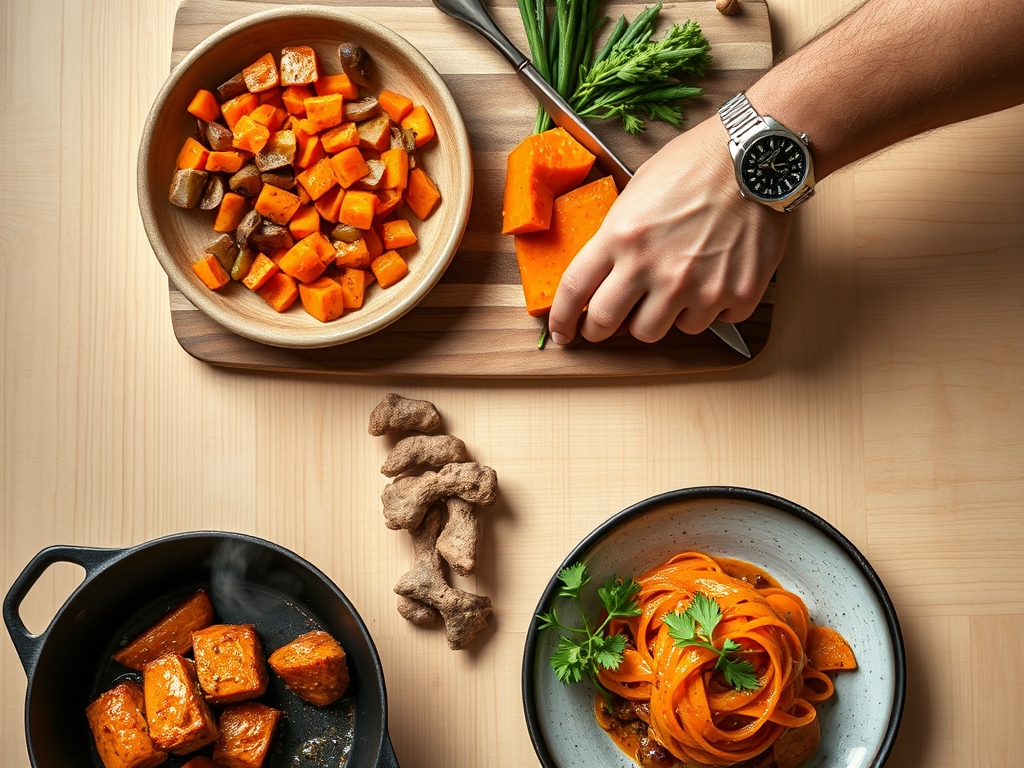
Using a sharpened chef's knife, cube your Hannah sweet potatoes into uniform one inch squares. Uniformity is not just for aesthetics; it ensures that every piece has the same surface area to volume ratio, leading to even cooking.
Pro Tip: This prevents enzymatic browning. When you cut a potato, you rupture cell walls, releasing polyphenol oxidase. By keeping the cubes in a bowl of cold water until the moment of cooking, you inhibit this reaction and keep the flesh pristine and ivory.
2. The Parboil Technique
Place the cubes in a saucier filled with salted cold water. Bring to a boil and simmer for exactly five minutes. You are looking for a "fork tender" exterior while the core remains slightly resistant.
Pro Tip: This process initiates starch gelatinization. By partially cooking the starch granules in water first, you create a fuzzy, high surface area exterior that will eventually turn into the ultimate crunchy crust once it hits the fat in the pan.
3. The High Heat Sear
Drain the potatoes and let them air dry for two minutes. Heat your heavy-bottomed skillet with two tablespoons of oil. Carefully place the potatoes in the pan using tongs, ensuring they are not crowded.
Pro Tip: This is where the Maillard reaction occurs. The amino acids and reducing sugars in the Hannah potato react under high heat to create hundreds of different flavor compounds. If you crowd the pan, the temperature drops and the potatoes will steam rather than sear.
4. The Aromatic Infusion
Once the potatoes have developed a golden crust, add your rosemary and smashed garlic cloves. Use a microplane to zest a bit of lemon over the top in the final thirty seconds of cooking.
Pro Tip: This is a fat soluble flavor transfer. The essential oils in the rosemary are infused into the cooking fat, which then coats the potatoes. The heat helps aerate the citrus oils, sending that bright aroma straight to your olfactory sensors.
5. The Oven Finish
Transfer the skillet to the preheated oven for 15 minutes. This allows the dry heat to penetrate the core of the potato cubes, turning the interior into a texture resembling clotted cream.
Pro Tip: Watch for thermal carryover. The internal temperature of the potatoes will continue to rise by 5 to 10 degrees after you remove them from the oven. Pull them out when they look slightly less done than your final goal to avoid a dry interior.
The Deep Dive:
When we look at the macro nutrition of the Hannah sweet potato, it is a powerhouse of complex carbohydrates and Vitamin A. One medium potato contains roughly 120 calories, 0 grams of fat, and 4 grams of fiber. Its low glycemic index makes it a superior choice for sustained energy compared to white potatoes.
Dietary Swaps:
For a Vegan version, utilize avocado oil for its high smoke point and buttery finish. For those following a Keto lifestyle, while sweet potatoes are generally higher in carbs, you can reduce the portion size and pair them with high fat proteins like ribeye to blunt the insulin response. For a Gluten Free crunch, toss the parboiled potatoes in a light dusting of arrowroot powder before searing.
The Fix-It:
- Soggy Potatoes: This happens when the pan is too cool. Fix it by increasing the heat and using a bench scraper to remove any stuck bits, then adding a fresh teaspoon of oil.
- Burnt Garlic: Garlic burns faster than potatoes. Always add aromatics in the last few minutes of the stovetop phase. If they burn, remove the garlic immediately and deglaze the pan with a splash of broth.
- Internal Hardness: If the outside is dark but the inside is hard, your oven temperature is too high. Lower the heat to 375 and cover the skillet with foil to trap steam and soften the core.
Meal Prep: To maintain "day-one" quality, reheat your Hannah sweet potatoes in an air fryer or a dry skillet. Avoid the microwave, as it vibrates water molecules and turns the crispy starch structure into a gummy, viscous mess.
The Wrap-Up:
You have now mastered the sophisticated science of the Hannah sweet potato. By respecting the starch structure and utilizing high heat chemistry, you have turned a simple root vegetable into a culinary event. Remember that cooking is as much about physics as it is about flavor. Use your tongs with confidence, trust your digital scale, and never underestimate the power of a perfectly timed sear. Now, go forth and dazzle your palate with these nutrient dense, golden treasures.
The Kitchen Table:
Are Hannah sweet potatoes healthier than orange ones?
Both are nutrient dense, but Hannah sweet potatoes often have a slightly lower glycemic index. They provide significant amounts of fiber, Vitamin C, and potassium, making them an excellent choice for stable energy levels throughout the day.
Why are my Hannah sweet potatoes so dry?
Hannah potatoes are naturally starchier and less moist than orange varieties. To fix dryness, ensure you use the parboiling method described above and do not skip the addition of a high quality fat like olive oil or butter during roasting.
Can I eat the skin of a Hannah sweet potato?
Absolutely. The skin is thin and contains a large portion of the potato's total fiber content. Just ensure you scrub them thoroughly with a vegetable brush to remove any residual soil before dicing and cooking.
Do Hannah sweet potatoes taste like regular potatoes?
They are a beautiful hybrid. They possess the creamy texture of a Yukon Gold but with a distinct, nutty sweetness reminiscent of roasted chestnuts. This makes them incredibly versatile for both savory and sweet applications.