Imagine the scent of scorched brown sugar and pimento wood drifting through a humid evening breeze. That is the essence of the islands. When you dive into authentic caribbean sweet potato recipes, you are not just making a side dish; you are mastering a complex interplay of tropical starches and volatile aromatics. We are moving far beyond the marshmallow-topped casseroles of the north. Instead, we are looking for that specific, dense, cream-colored sweet potato, often called batata, which holds its structural integrity even under intense heat. This journey is about high-contrast flavors where the natural sugars of the tuber meet the sharp, piquant bite of scotch bonnet peppers. It is a culinary balancing act that requires a bit of science and a lot of soul. By the time we are finished, you will understand how to manipulate starch retrogradation and lipid emulsification to create the most decadent, vibrant dishes in your repertoire. Grab your favorite apron; we are going to make some magic happen in that kitchen.
The Gathers:
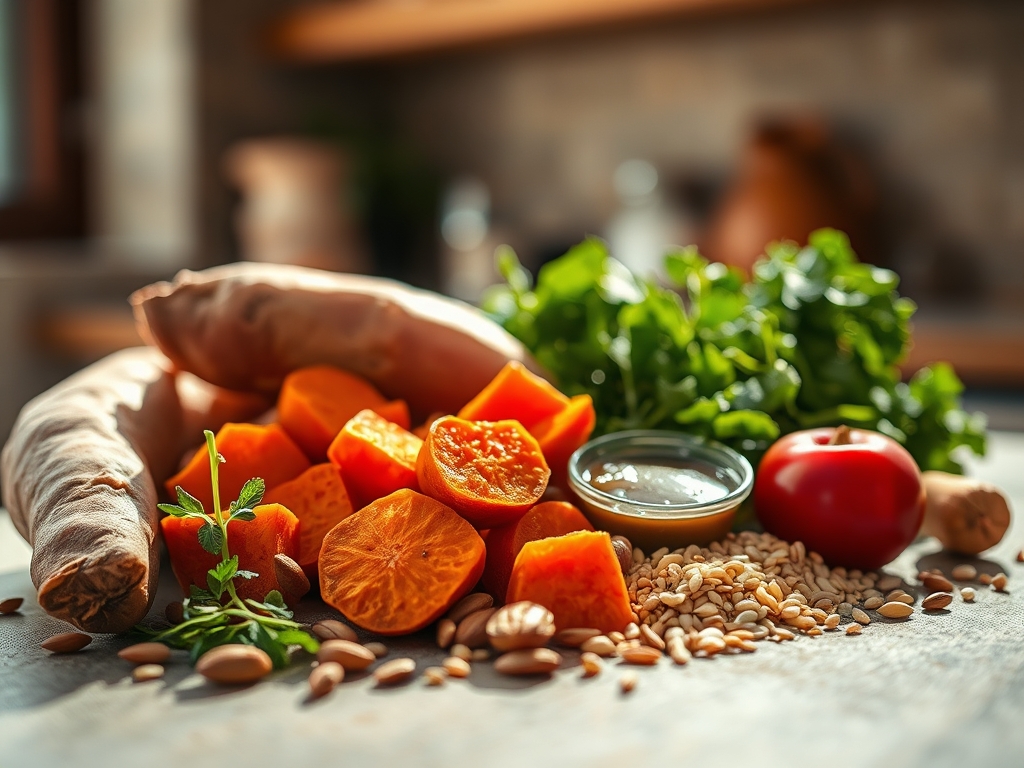
Setting up your mise-en-place is the difference between a frantic kitchen and a rhythmic flow. For these caribbean sweet potato recipes, your primary subject is the Ipomoea batatas. Look for tubers that feel heavy for their size, indicating high moisture content. You will also need high-fat coconut milk; look for cans with at least 17 percent fat to ensure a viscous mouthfeel. Your aromatic base requires fresh thyme, scallions, and allspice berries. Use a digital scale to measure your ingredients for consistency.
Smart Substitutions: If you cannot find the white-fleshed batata, the common orange Jewel or Garnet varieties work, though they contain more amylase, which makes them softer when cooked. To mimic the Caribbean texture, you can add a tablespoon of cassava flour to the mash to increase the starch density. Instead of scotch bonnets, a habanero provides a similar heat profile, though it lacks the specific fruity esters found in the traditional pepper. Always use a microplane to zest your citrus and grate your ginger; this maximizes surface area and ensures the essential oils infuse the fat source instantly.
The Clock
Efficiency in the kitchen is about understanding the Chef's Flow. You should budget 20 minutes for prep and 45 minutes for active cooking. The secret to saving time is multitasking during the thermal transition periods. While your potatoes are undergoing hydrolysis in the boiling water or roasting in the oven, you should be tempering your spices in a saucier. This allows the fat-soluble compounds in the allspice and thyme to bloom. Total time from pantry to table is roughly 65 minutes. Remember that starch takes time to gelatinize; rushing the heat will leave you with a grainy texture rather than a silky finish.
The Masterclass
1. The Precision Prep
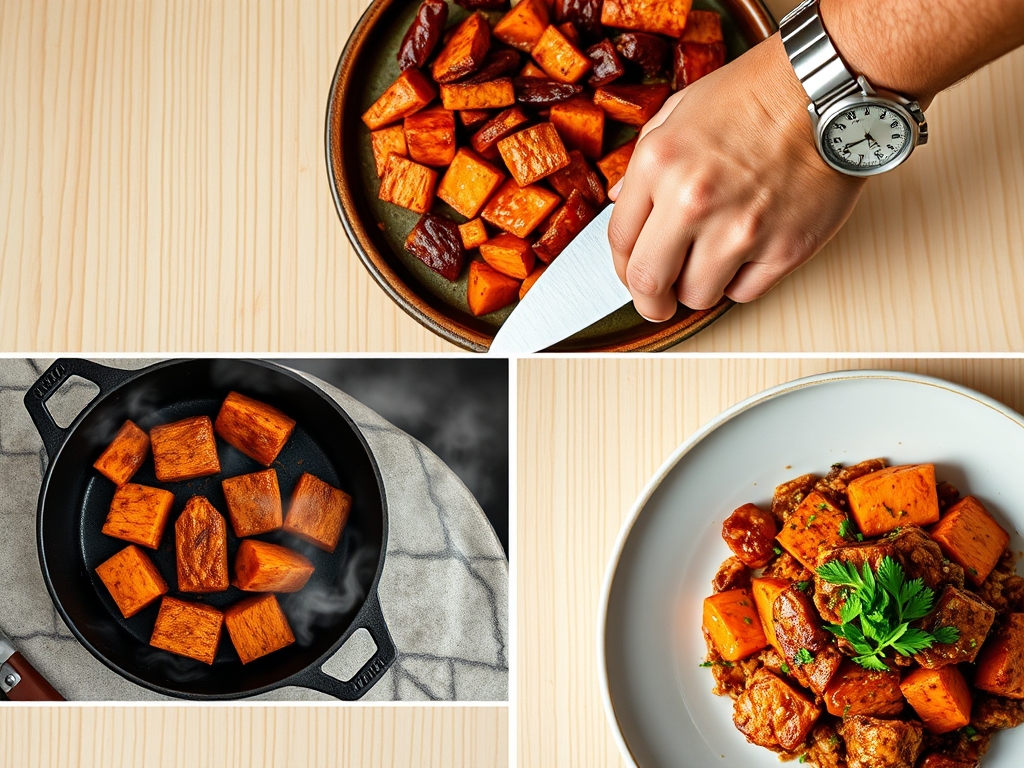
Start by scrubbing your potatoes with a stiff brush. Use a sharp chef's knife to cut them into uniform two-inch cubes. Uniformity is not just for aesthetics; it ensures that every piece reaches the same internal temperature simultaneously.
Pro Tip: Place your cut potatoes in a bowl of cold water immediately. This prevents enzymatic browning, a reaction where polyphenol oxidase meets oxygen and turns the flesh gray.
2. The Infused Simmer
Place the cubes in a heavy-bottomed skillet or pot. Cover with cold water, adding two crushed garlic cloves and a sprig of thyme. Bring to a boil, then reduce to a simmer.
Pro Tip: Starting with cold water allows the starch granules to swell gradually. If you drop them into boiling water, the outside cooks too fast and sloughs off before the center is tender, a phenomenon known as external gelatinization.
3. The Aromatic Bloom
While the potatoes simmer, use a saucier to heat your coconut milk with ginger and allspice. Do not let it boil vigorously; you want to gently render the flavors into the liquid without breaking the emulsion.
Pro Tip: This is a process of lipid-infusion. Many of the flavor compounds in Caribbean spices are hydrophobic, meaning they dissolve better in fat than in water.
4. The Steam Dry
Once the potatoes are fork-tender, drain them thoroughly. Return them to the hot pot for 60 seconds over low heat, shaking them gently.
Pro Tip: This step utilizes evaporative cooling to remove excess surface moisture. Removing this water ensures that when you add your coconut milk, the potatoes absorb the flavorful fat rather than becoming soggy.
5. The Aerated Mash
Use a potato ricer or a heavy whisk to break down the tubers. Gradually fold in your warm, infused coconut milk.
Pro Tip: To achieve a cloud-like texture, you want to aerate the mixture. Incorporating air bubbles lightens the density of the starch, making the dish feel less heavy on the palate.
6. The Maillard Finish
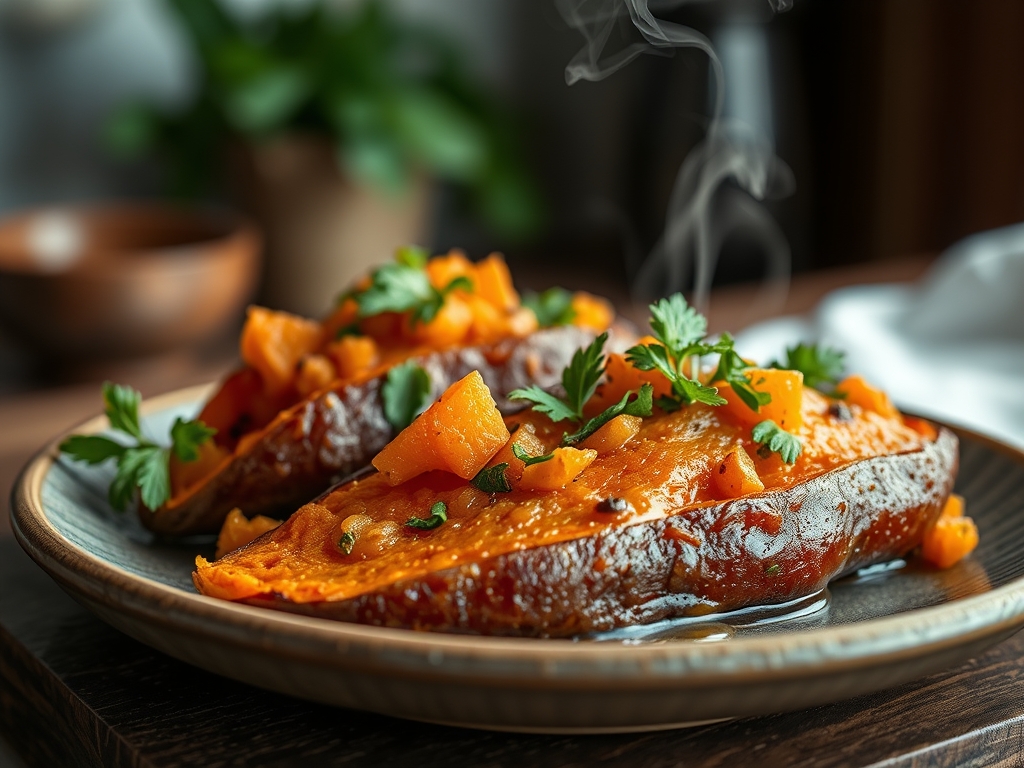
If you are making a roasted version, toss the parboiled cubes in coconut oil and sea salt. Spread them on a sheet pan, ensuring they do not touch.
Pro Tip: Crowding the pan causes steaming. By giving them space, you encourage the Maillard reaction, a chemical reaction between amino acids and reducing sugars that creates that signature savory, browned crust.
7. The Acid Balance
Just before serving, fold in a squeeze of fresh lime juice and finely chopped scallions. Use a bench scraper to clean your board efficiently after chopping.
Pro Tip: The citric acid acts as a flavor brightener. It cuts through the heavy lipids of the coconut milk and the sweetness of the potato, creating a balanced pH profile on the tongue.
8. The Resting Period
Allow the dish to sit for five minutes before serving. This allows the starches to stabilize.
Pro Tip: This involves thermal carryover. The residual heat continues to cook the center of the starch granules, ensuring a perfectly uniform texture throughout the entire batch.
The Deep Dive
From a nutritional standpoint, these caribbean sweet potato recipes are powerhouses. They are rich in complex carbohydrates and Vitamin A. One serving typically contains about 180 calories, mostly from starch and healthy medium-chain triglycerides in the coconut milk. For a Vegan version, this recipe is already compliant. If you are looking for a Keto alternative, you can swap half the sweet potato for cauliflower florets to reduce the net carb count while maintaining the flavor profile.
The Fix-It:
- Gummy Texture: This happens if you overwork the potatoes in a blender. Use a manual masher to avoid shearing the starch molecules.
- Bland Flavor: You likely did not salt the cooking water. Salt is a flavor bridge; without it, the interior of the potato remains flat. Add a pinch of sea salt at the end to fix.
- Broken Sauce: If your coconut milk separates, whisk in a teaspoon of warm water to re-emulsify the fats.
Meal Prep Science: To reheat, avoid the microwave if possible. Use a low oven or a stovetop pan with a splash of coconut milk. This prevents the starch from becoming "retrograded," which is when the molecules crystallize and become tough or rubbery after cooling.
The Wrap-Up
Mastering caribbean sweet potato recipes is about more than just following a list of ingredients; it is about respecting the chemistry of the ingredients. When you balance the natural sugars with the heat of the scotch bonnet and the creaminess of the coconut, you create a dish that is culturally rich and technically perfect. Use your tongs to serve it up with some jerk chicken or grilled fish, and watch your friends marvel at the depth of flavor you have achieved. Now, go turn up the heat and let those tropical aromas fill your home!
The Kitchen Table
Can I use canned sweet potatoes for this?
No, canned varieties are usually packed in syrup and have a compromised cellular structure. For the correct density and flavor, always start with fresh, whole tubers to ensure the starch behaves correctly during the cooking process.
Why is my mash turning out sticky?
Stickiness is caused by releasing too much starch. This happens if you use a food processor or over-mix. Use a ricer or a hand masher to keep the starch granules intact for a fluffy, light result.
What is the best way to store leftovers?
Store in an airtight container for up to four days. To maintain the "day-one" quality, reheat slowly on the stove with a tablespoon of coconut milk to restore the creamy emulsion and prevent the starch from drying out.
Can I make this dish spicy without peppers?
Yes, you can use a heavy hand with grated fresh ginger and black pepper. These provide a different type of heat that complements the sweet potato without the intense capsaicin burn of a scotch bonnet pepper.