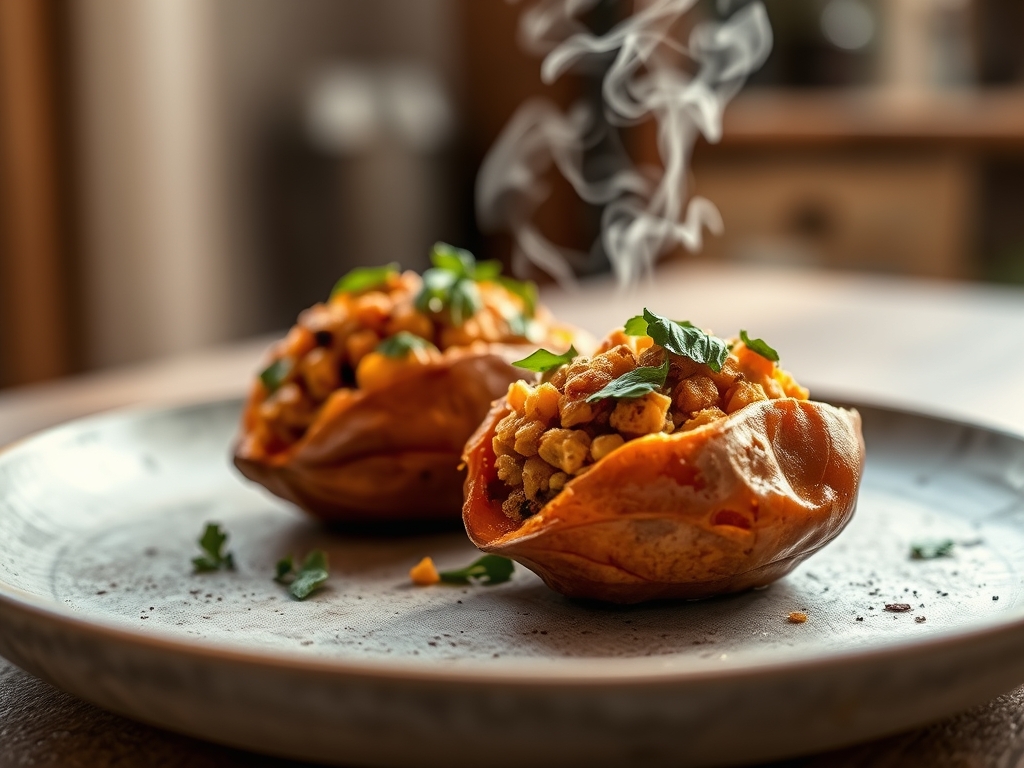
Picture a crisp autumn evening where the air carries a hint of woodsmoke and your kitchen is bathed in the golden glow of a setting sun. You pull a tray from the oven; the skins are charred to a deep mahogany, and the interiors have collapsed into a custard-like sweetness. These vegan stuffed sweet potato recipes are not just dinner; they are a masterclass in plant-based alchemy. We are moving far beyond the basic black bean topping. We are talking about building layers of acidity, crunch, and umami that challenge the status quo of vegan cooking.
The magic lies in the contrast between the earthy, maltose-rich flesh of the tuber and the vibrant, high-acid garnishes we will deploy. Sweet potatoes are the ultimate canvas because their high sugar content allows for incredible Maillard reactions during roasting. When you pair that natural sweetness with fermented funk or spicy heat, you achieve a flavor profile that feels expensive and intentional. Grab your favorite apron and clear some counter space; we are about to transform the humble spud into a five-star centerpiece.
The Gathers:
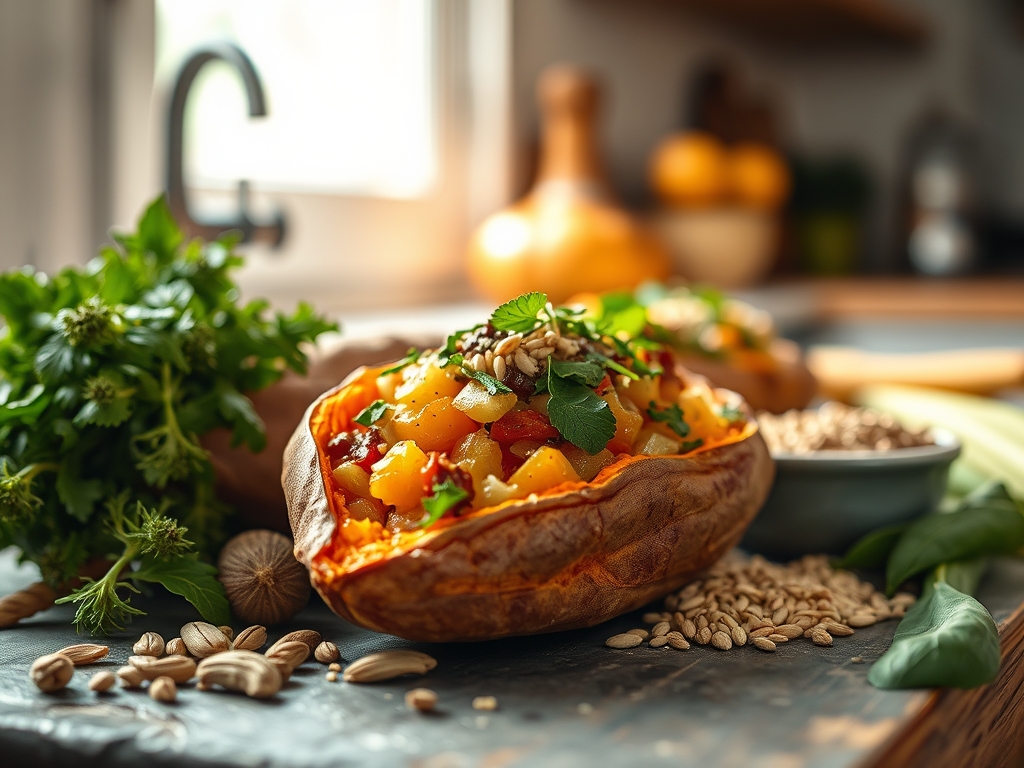
Before we ignite the burners, let us look at our mise-en-place. For the base, seek out Garnet or Jewel varieties. These possess a higher moisture content than the starchy Japanese white sweet potato, ensuring a viscous and creamy texture once roasted. You will need a high-smoke-point oil, such as avocado or refined coconut oil, to facilitate heat transfer without acrid scorching.
Our flavor profiles require a pantry of powerhouses. Gather organic chickpeas, curly kale, tahini, pomegranate arils, and smoked paprika. For the more adventurous variations, ensure you have white miso paste for an umami boost and nutritional yeast for that essential savory "cheesy" finish. Use a digital scale to measure your dry ingredients; precision ensures that your spice rubs are balanced rather than overwhelming.
Smart Substitutions: If you are avoiding nuts, replace tahini with a sunflower seed butter thinned with lemon juice. For a lower glycemic index, you can swap the sweet potato for a kabocha squash, though you must adjust roasting times as the density varies. Always use a microplane to zest your citrus; the volatile oils in the zest provide a piquant brightness that heavy juices cannot match.
The Clock:
Efficiency in the kitchen is about the "Chef's Flow." Total active preparation time is approximately 20 minutes, while the oven does the heavy lifting for 45 to 60 minutes.
Start by preheating your oven to 425 degrees Fahrenheit. While the oven stabilizes, scrub your potatoes and prepare your fillings. By the time the potatoes are halfway through their roast, your stovetop components should be simmering in a heavy-bottomed skillet. This staggered timing ensures that your toppings are hot and your garnishes are fresh the moment the potatoes emerge. This "just-in-time" delivery prevents your greens from wilting into a sad, gray mush.
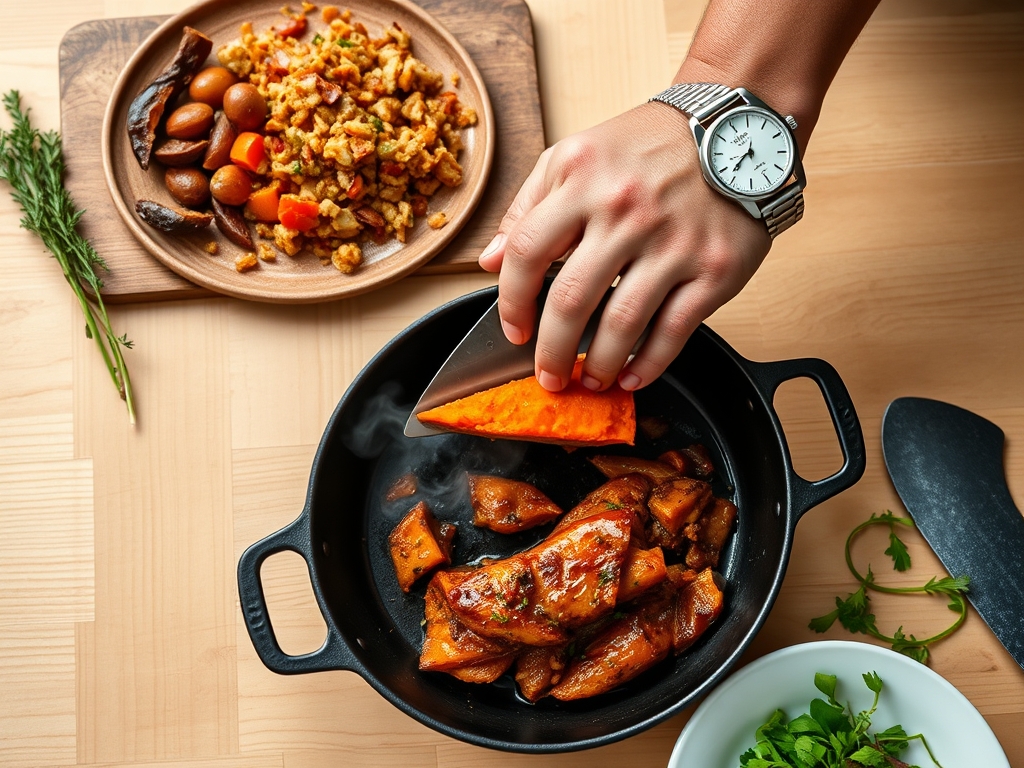
The Masterclass:
1. The Surface Preparation
Prick the skins with a fork to allow steam to escape and coat them lightly in oil and sea salt. This creates a semi-permeable membrane that allows moisture to evaporate, concentrating the sugars within.
Pro Tip: This prevents internal pressure from causing the potato to burst. More importantly, the salt initiates osmosis, drawing out just enough surface moisture to ensure the skin becomes crisp rather than leathery.
2. The High-Heat Roast
Place the potatoes directly on a wire rack over a baking sheet. This allows for 360-degree convection, ensuring the bottom does not become soggy from sitting in its own juices.
Pro Tip: Use thermal carryover to your advantage. Remove the potatoes when they feel soft but not collapsed. They will continue to cook for 5 to 10 minutes once out of the oven, reaching perfect consistency without burning the exterior.
3. The Filling Emulsification
While roasting, prepare your creamy elements. If making a tahini drizzle, slowly whisk in ice-cold water. The sauce will initially seize and then transform into a pale, aerated cream.
Pro Tip: This is a lesson in emulsification. The cold water helps the fat molecules in the tahini suspend evenly, creating a fluffy texture that coats the back of a spoon beautifully.
4. The Sauté and Deglaze
Sauté your aromatics (garlic, shallots, ginger) in a saucier. Once they are fragrant and translucent, add a splash of vegetable stock or apple cider vinegar to lift the browned bits from the bottom.
Pro Tip: Deglazing captures the fond, those concentrated protein and sugar clusters stuck to the pan. This adds a layer of complexity to your stuffing that salt alone cannot provide.
5. The Texture Layering
Once the potatoes are split open, fluff the interior with a fork. Add a small knob of vegan butter or a drizzle of olive oil before piling on the heavy fillings, followed by the "crunch" factor like toasted pepitas or raw radishes.
Pro Tip: This prevents enzymatic browning of the interior while providing a fat barrier. The fat coats the starch granules, making every bite feel richer and more luxurious on the palate.
The Deep Dive:
Macro Nutrition: One medium sweet potato provides about 4 grams of plant-based protein and is an exceptional source of Beta-carotene. When stuffed with chickpeas and tahini, you are looking at a complete amino acid profile and a healthy dose of fiber to keep blood sugar stable.
Dietary Swaps: To make these recipes Keto-friendly, swap the potato for roasted cauliflower steaks. For a Gluten-Free guarantee, ensure your miso paste is labeled GF, as some brands use barley as a fermentation starter.
The Fix-It:
- Soggy Skin: Your oven temperature was too low. Fix it by cranking the heat to 450 for the last five minutes.
- Bitter Tahini: You likely used an old jar. Balance the bitterness with a drop of maple syrup or extra lemon.
- Hard Centers: Use a tongs to squeeze the potato; if it resists, it needs more time. If you are in a rush, a 5-minute microwave head-start can save the day.
Meal Prep: To maintain "day-one" quality, store the roasted potatoes and fillings separately. Reheat the potato in an air fryer at 350 degrees for 8 minutes to re-crisp the skin. Microwaving often turns the skin rubbery due to rapid moisture loss.
The Wrap-Up:
Mastering vegan stuffed sweet potato recipes is about embracing the science of flavor. By balancing the natural glucose of the potato with acidic dressings and crunchy textures, you turn a simple root vegetable into a sophisticated culinary event. Whether you are meal prepping for a busy week or hosting a cozy dinner party, these techniques ensure a perfect result every single time. Now, get into that kitchen and start roasting!
The Kitchen Table:
How do I prevent my sweet potatoes from exploding?
Always pierce the skin 5 to 6 times with a fork or paring knife. This allows steam to escape during the roasting process, preventing internal pressure buildup that can cause the tuber to burst in your oven.
Can I roast sweet potatoes ahead of time?
Yes, you can roast them up to 3 days in advance. Store them in an airtight container in the fridge. For the best texture, reheat them in a 375-degree oven or an air fryer to restore skin crispness.
What is the best way to get crispy skin?
Rub the skins with a high-smoke-point oil and a generous amount of sea salt. Roast them on a wire rack rather than a flat sheet to allow hot air to circulate entirely around the potato for even dehydration.
Why is my tahini sauce bitter?
Tahini can be naturally bitter if the sesame seeds were over-roasted or the oil has oxidized. Fix this by adding a small amount of maple syrup, extra lemon juice, or a pinch of salt to neutralize the bitter notes.