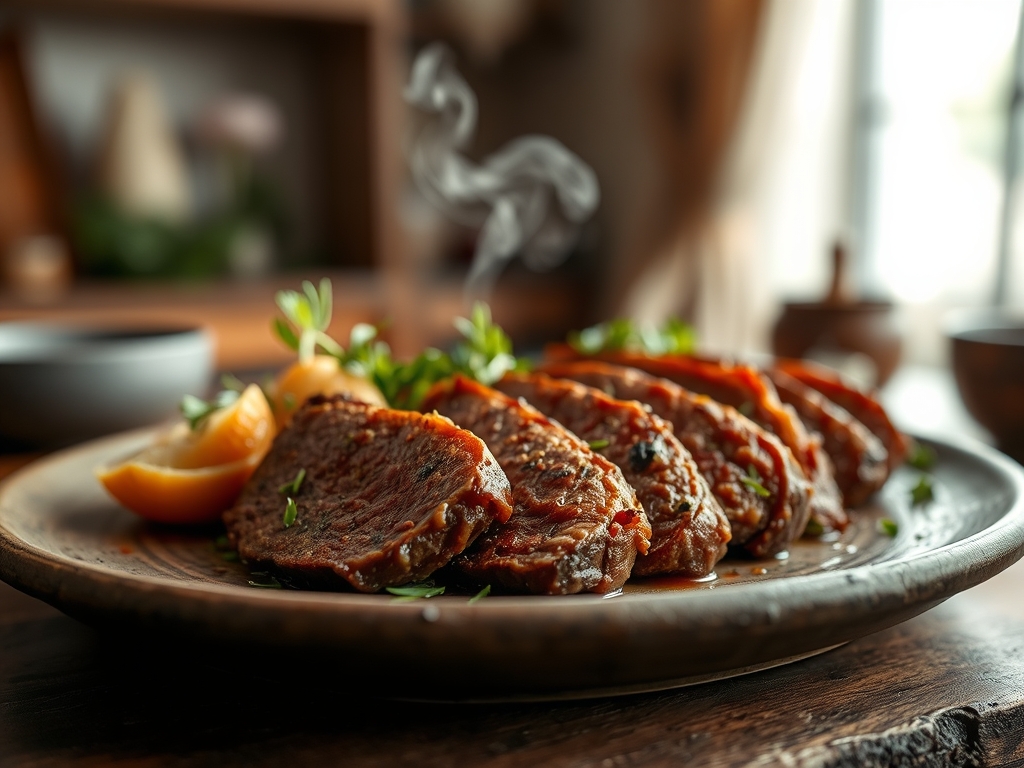
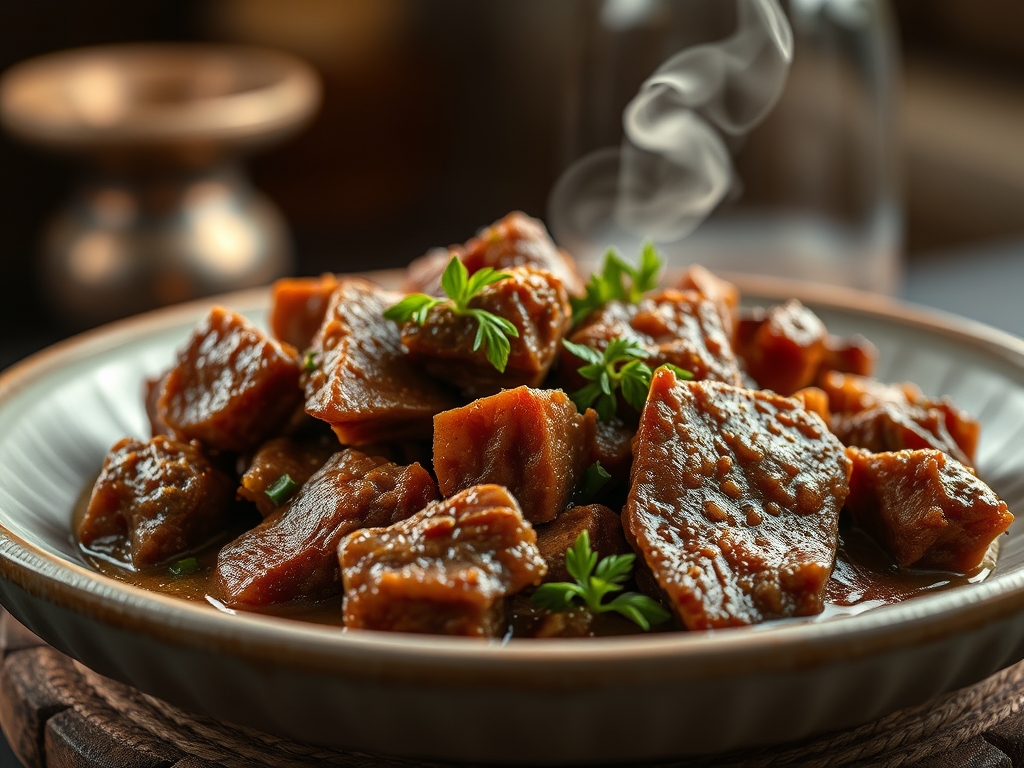
Imagine the scent of caramelized onions and seared protein swirling through your kitchen on a rainy Tuesday. There is something deeply primal about a heavy pot bubbling on the stove. When you master brown stew beef recipes, you are not just cooking; you are performing a complex series of chemical transformations that turn tough connective tissue into velvet.
The secret to a truly transcendent stew is not just time. It is the deliberate application of heat and the careful balancing of acidity. We are aiming for a sauce that is glossy, rich, and perfectly viscous. Whether you are a seasoned home cook or a curious beginner, understanding the molecular magic behind the Maillard reaction will elevate your kitchen game from simple nourishment to culinary art. Let us dive into the chemistry of comfort.
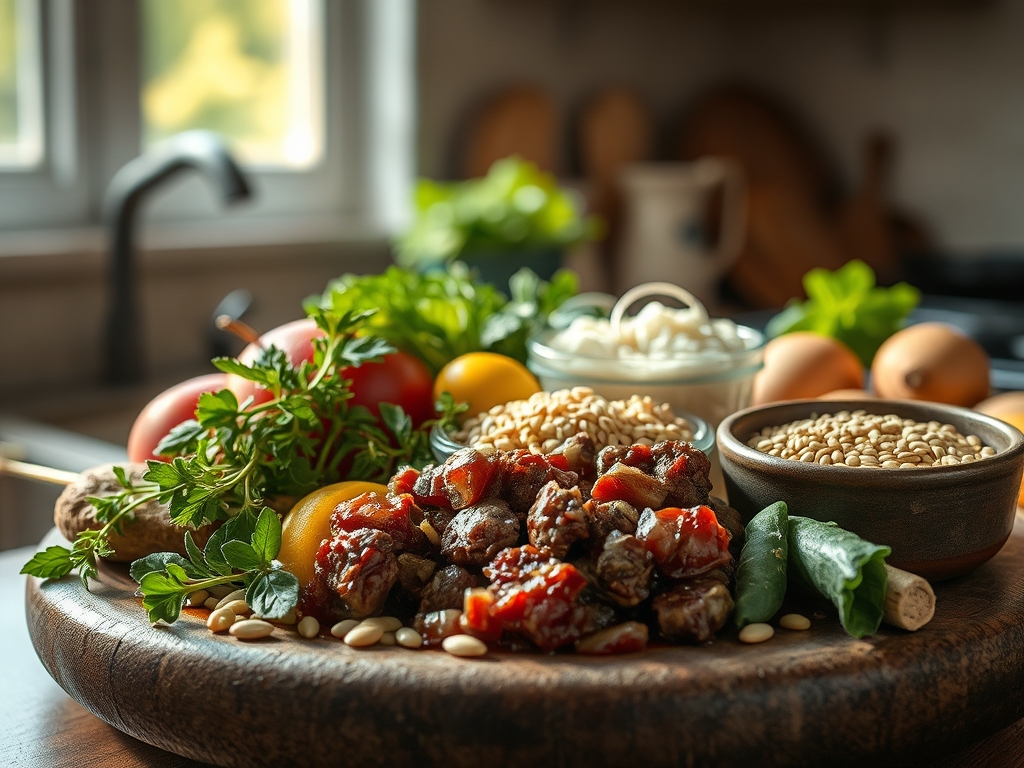
The Gathers:
Before we ignite the burner, we must assemble our mise-en-place. Use a digital scale for precision, as volume measurements for chopped vegetables can be wildly inconsistent. For the protein, choose a well-marbled chuck roast. This cut is rich in collagen, which transforms into gelatin during the slow simmer. You will also need the "holy trinity" of aromatics: yellow onions, carrots, and celery.
Your pantry should yield high-quality beef stock, tomato paste for umami depth, and a dry red wine like Cabernet Sauvignon to deglaze the pan. Do not forget the aromatics: fresh thyme, bay leaves, and whole peppercorns. For the "Smart Substitutions," if you are out of wine, a splash of balsamic vinegar or pomegranate juice provides the necessary piquant acidity. If you lack fresh garlic, use a microplane to grate a frozen ginger knob for a bright, unexpected zing. Ensure your beef is patted dry with paper towels; moisture is the enemy of a perfect sear.
The Clock
Efficiency in the kitchen is about "Chef's Flow." Total active prep time should take roughly 30 minutes, while the passive simmering phase requires 2.5 to 3 hours.
0-15 Minutes: Butcher the beef into uniform 1.5-inch cubes using a sharp chef's knife and a bench scraper to clear your board.
15-30 Minutes: Sear the meat in batches and sauté the aromatics.
30-180 Minutes: The low-and-slow braise. This is where the connective tissue dissolves.
Final 15 Minutes: Reducing the sauce to reach the desired consistency.
The Masterclass:
1. The Strategic Sear
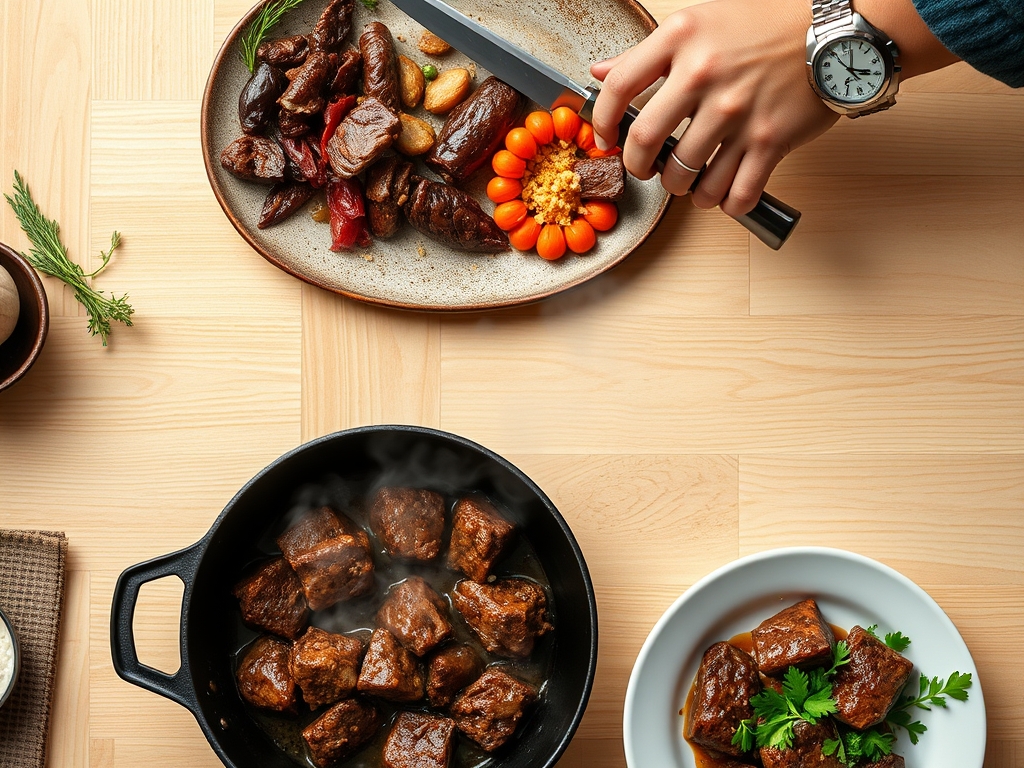
Heat a heavy-bottomed skillet or Dutch oven until it is shimmering. Add high-smoke-point oil and sear the beef in small batches. Do not crowd the pan. If the temperature drops, the meat will steam in its own juices rather than brown.
Pro Tip: This step utilizes the Maillard reaction, a chemical reaction between amino acids and reducing sugars that creates hundreds of different flavor compounds. Achieving a deep mahogany crust is the foundation of flavor for all brown stew beef recipes.
2. The Fond Retrieval
Once the meat is removed, you will see dark bits stuck to the bottom of the pot. This is called the "fond." Add your diced onions and use a wooden spoon to scrape these bits up as the onions release their moisture.
Pro Tip: This process is called deglazing. The fond contains concentrated essence of the seared meat; incorporating it back into the liquid ensures a complex, layered profile rather than a one-dimensional salty taste.
3. The Tomato Paste Toast
Clear a small circle in the center of your aromatics and drop in two tablespoons of tomato paste. Stir it directly against the hot metal for 90 seconds until it turns a rusty brick color.
Pro Tip: Toasting the paste causes caramelization of the natural sugars. It removes the raw, metallic "tinny" taste and replaces it with a mellow, savory sweetness that acts as a natural thickener.
4. The Deglazing Pour
Slowly pour in your red wine or acidic substitute. Use your tongs to move the vegetables around, ensuring every square inch of the pot is clean. Let the liquid reduce by half.
Pro Tip: Reducing the liquid concentrates the flavors and burns off the harsh ethanol. This ensures the wine provides structure and brightness without making the stew taste like a cocktail.
5. The Low and Slow Infusion
Return the beef to the pot along with any accumulated juices. Cover with beef stock until the meat is just submerged. Add your herbs and bring to a bare simmer, then cover tightly.
Pro Tip: Maintain a temperature between 180 and 190 degrees Fahrenheit. This is the "sweet spot" where collagen denaturation occurs. If the liquid boils too vigorously, the muscle fibers will tighten and become stringy.
6. The Viscosity Check
Thirty minutes before serving, remove the lid. If the sauce is too thin, you can whisk in a small amount of beurre manie (equal parts softened butter and flour).
Pro Tip: This creates a stable emulsification. The fat in the butter coats the flour particles, preventing clumps and resulting in a sauce that is silky and "nappe," meaning it coats the back of a spoon perfectly.
The Deep Dive
From a nutritional standpoint, a standard serving of brown stew beef provides approximately 350 calories, 35 grams of protein, and a significant dose of iron and zinc. To make this Keto-friendly, omit the carrots and potatoes, substituting them with radishes or cauliflower. For a Gluten-Free version, use cornstarch or a gelatin slurry to thicken the sauce instead of flour.
The Fix-It:
- Too Salty? Drop in a peeled, halved potato for 20 minutes; it acts as a sponge for excess sodium.
- Too Thin? Remove a cup of the liquid, whisk in a teaspoon of tomato paste, and return it to the pot to simmer uncovered.
- Too Bitter? A tiny pinch of brown sugar or a teaspoon of apple cider vinegar can balance an over-reduced sauce.
Meal Prep Science: Stew actually tastes better the next day. As the dish cools, the aromatics continue to infuse the liquid, and the gelatin sets. When reheating, do so slowly on the stovetop with a splash of water to re-hydrate the proteins without overcooking them.
The Wrap-Up
Mastering brown stew beef recipes is a rite of passage for any serious home cook. It requires patience, a bit of scientific curiosity, and the right tools. By focusing on the sear, the deglaze, and the slow simmer, you transform humble ingredients into a masterpiece of texture and taste. Now, grab your favorite saucier, put on some music, and let the slow-cooking magic begin. Your kitchen is about to become the most popular room in the house.
The Kitchen Table
Which beef cut is best for stew?
Chuck roast is the gold standard. It contains the perfect ratio of fat and connective tissue. As the collagen breaks down during the long cooking process, it creates a self-basting environment that results in incredibly tender, succulent meat.
Why is my stew meat tough?
You likely boiled the meat instead of simmering it. High heat causes muscle fibers to contract and squeeze out moisture. Keep the liquid at a gentle "smile" (tiny bubbles) to ensure the proteins remain relaxed and tender.
Can I make this in a slow cooker?
Yes, but you must sear the meat in a skillet first. Slow cookers do not reach temperatures high enough to trigger the Maillard reaction. Without that initial sear, your stew will lack the deep, traditional "brown" flavor profile.
How do I thicken the sauce without flour?
Use a "puree" method. Take a cup of the cooked vegetables and a bit of liquid, blend them until smooth, and stir back into the pot. This adds body and flavor without introducing gluten or altering the nutritional profile.