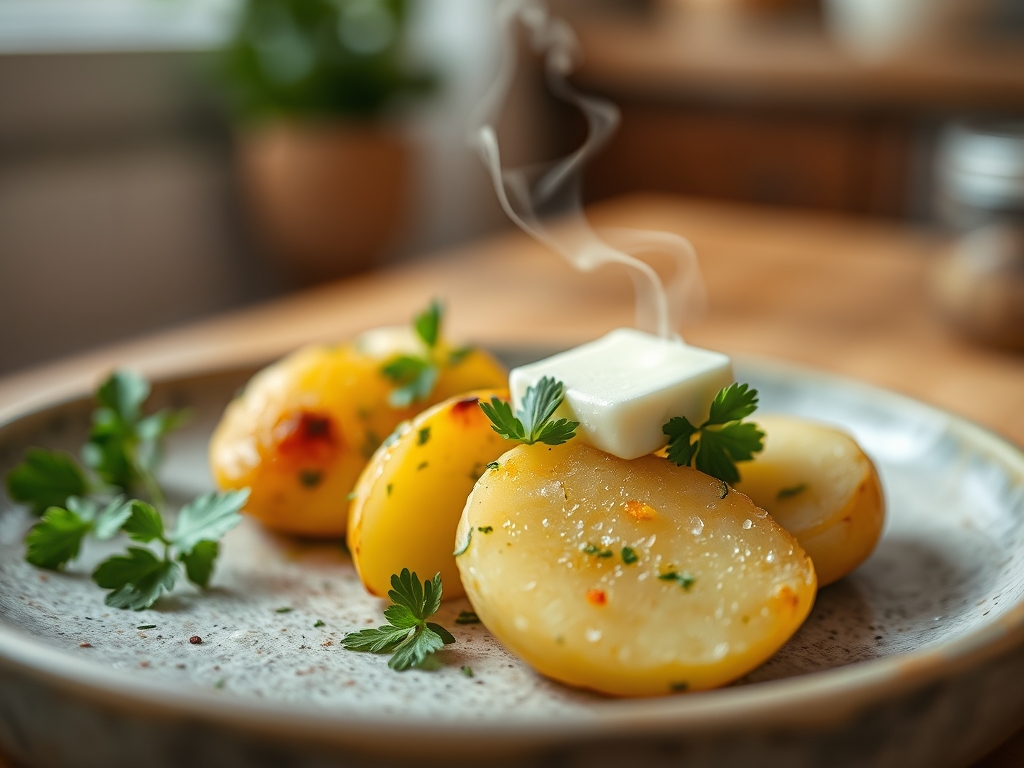
Imagine the scent of a kitchen where the air is heavy with the aroma of toasted dairy and the sharp, grassy brightness of freshly chopped herbs. We have all been there; staring at a bag of starchy tubers and wondering how to elevate them from a humble side dish to the star of the plate. The secret lies in the chemistry of fat and chlorophyll. Mastering parsley potato recipes with butter is not just about boiling and tossing; it is a lesson in emulsification and temperature control. When you get that golden, nutty brown butter to cling to a perfectly fluffed potato surface, you are creating a culinary masterpiece that hits every sensory note from salty to earthy.
We are going to dive deep into the molecular magic that happens when a hot potato meets cold butter. This is about more than just a recipe. It is about understanding how to manipulate starch and moisture to create a texture that is velvety on the outside yet airy on the inside. Grab your apron and your favorite heavy-bottomed skillet. We are about to turn a simple root vegetable into a sophisticated, aromatic experience that will have your guests asking for your secret technique before they even finish their first bite.
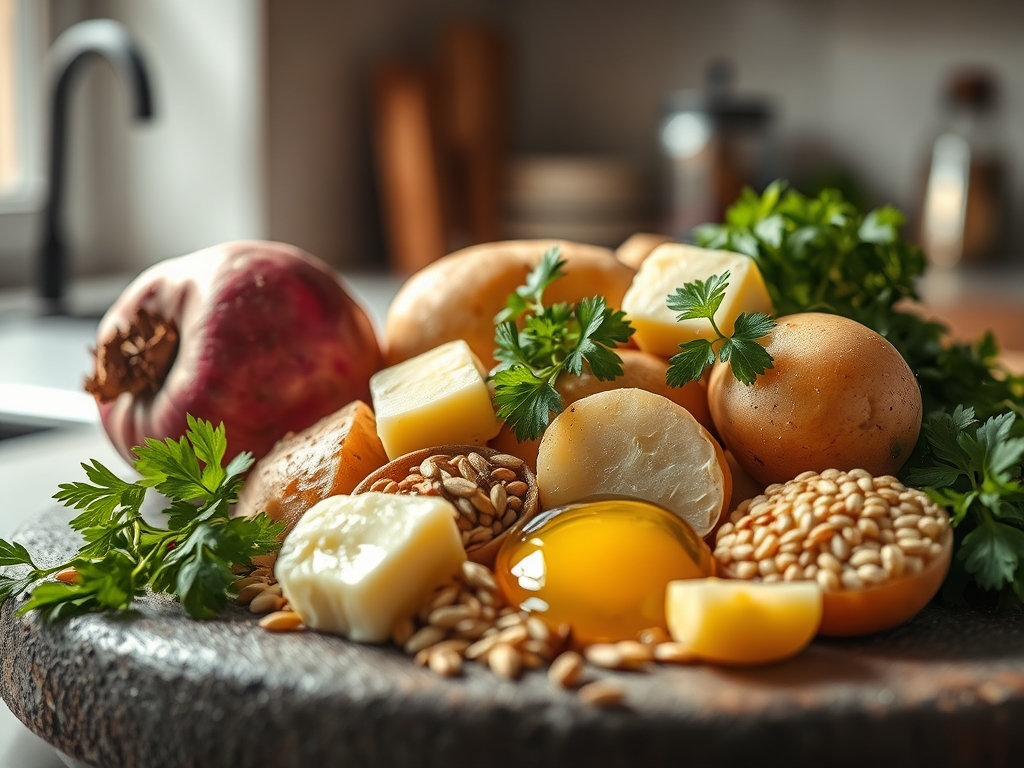
The Gathers:
To achieve professional results, your mise-en-place must be precise. Start with two pounds of Yukon Gold potatoes. These are preferred over Russets because their medium-starch content provides a naturally creamy texture without falling apart. You will need four ounces of high-quality European-style butter, which has a higher butterfat percentage and lower water content than standard grocery store sticks. This is crucial for achieving a truly viscous sauce that coats rather than runs.
For the aromatics, gather one large bunch of Italian flat-leaf parsley. Use a sharp chef knife to achieve a fine mince; bruising the leaves with a dull blade will cause oxidation and a bitter metallic taste. You will also need Maldon sea salt for its crystalline structure and a microplane to zest a hint of lemon, which adds a piquant lift to the heavy fats.
Smart Substitutions: If you are out of Yukon Golds, Red Bliss potatoes offer a waxy alternative that holds its shape beautifully. For a dairy-free version, use a high-quality vegan butter block that contains cashew or coconut fats to mimic the mouthfeel of traditional dairy. If parsley feels too simple, swap half the volume for fresh chervil or chives to add a subtle onion note.
The Clock
Efficiency in the kitchen is all about the Chef's Flow. Total preparation time is approximately 10 minutes, mostly spent on knife work and washing. The cooking time sits at a crisp 20 minutes.
The flow begins with the water boil. While the potatoes undergo gelatinization in the pot, you should be mincing your herbs and cubing your butter. By the time the potatoes are fork-tender, your skillet should be preheated. This overlap ensures that the potatoes are still steaming when they hit the fat, allowing for maximum absorption of the infused flavors.
The Masterclass
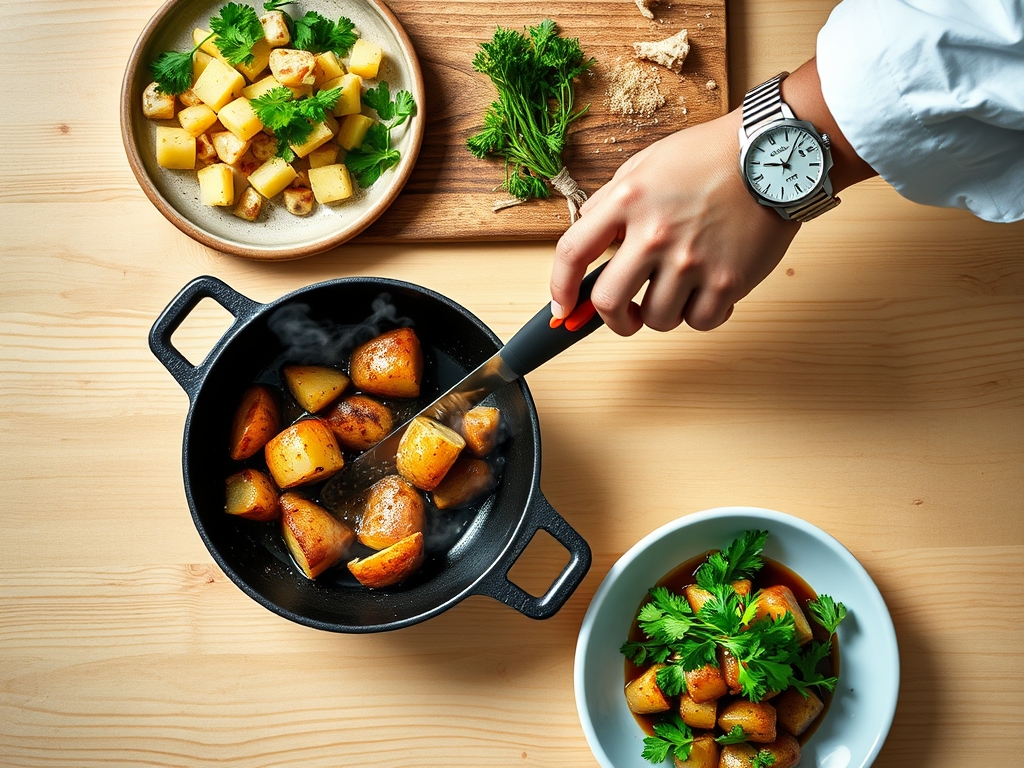
1. The Precision Cut
Uniformity is your best friend. Use a bench scraper to move your cubed potatoes into a pot of cold, heavily salted water. Starting with cold water ensures the exterior and interior cook at the same rate.
Pro Tip: This prevents the outside from becoming mushy before the center is soft. Scientists call this avoiding a thermal gradient imbalance, ensuring structural integrity across every piece.
2. The Parboil and Drain
Boil until the potatoes are just tender. Drain them thoroughly in a colander and let them sit for two minutes. You want to see steam rising aggressively; this is moisture leaving the surface, which creates microscopic craters.
Pro Tip: This process is called evaporative drying. Removing surface moisture allows the butter to occupy those tiny pores, creating a much deeper flavor profile than wet potatoes ever could.
3. The Butter Render
In a saucier or heavy skillet, melt your butter over medium heat. Watch for the foaming to subside. This is the water evaporating and the milk solids beginning to toast.
Pro Tip: This is the Maillard reaction in action. Toasting the milk solids until they are amber creates nutty aromatic compounds that pair perfectly with the earthy notes of the parsley.
4. The Aromatic Infusion
Toss the potatoes into the browned butter. Use tongs to gently turn them, ensuring every surface is slick with fat. Add half of your parsley now to let the heat release its essential oils into the butter.
Pro Tip: Heat acts as a solvent for fat-soluble flavor compounds in herbs. By adding some parsley early, you infuse the butter itself with a herbal base note.
5. The Aeration Toss
Increase the heat slightly and give the pan a few vigorous shakes. You are looking for the butter to emulsify with the small amount of starch clinging to the outside of the potatoes.
Pro Tip: This creates a starchy emulsion. The agitation breaks the fat into smaller droplets that are stabilized by the potato starch, resulting in a glossy, thick coating rather than a greasy puddle.
6. The Final Seasoning
Remove from heat and add the remaining fresh parsley and lemon zest. The residual heat is enough to wake up these fresh flavors without dulling their vibrant green color.
Pro Tip: This avoids enzymatic browning. Keeping the second half of the herbs away from high heat preserves the chlorophyll and the "bright" vitamin C notes of the lemon.
7. The Resting Period
Let the dish sit for three minutes before serving. This allows the internal temperature to stabilize and the butter coating to slightly thicken as it cools.
Pro Tip: This is known as thermal carryover. The potatoes will continue to soften slightly internally while the exterior sauce sets into a velvet-like finish.
The Deep Dive
From a nutritional standpoint, a serving of these potatoes provides complex carbohydrates and a significant dose of Vitamin C and Vitamin K from the parsley. To make this Keto-friendly, swap the potatoes for roasted cauliflower florets, which mimic the texture while slashing the carb count. For a Vegan approach, use a high-smoke-point avocado oil mixed with a touch of nutritional yeast for that savory "buttery" depth.
The Fix-It:
- Greasy Finish: If the butter is pooling, you likely had too much water on the potatoes. Fix it by tossing in a teaspoon of potato starch or flour to bind the fat.
- Bland Flavor: If it tastes flat, it needs acid. A few drops of white wine vinegar or extra lemon juice will brighten the heavy fats.
- Mushy Texture: You overboiled. Fix it by spreading them on a sheet tray and blasting them in a 450-degree oven for five minutes to crisp the edges.
Meal Prep: To reheat, avoid the microwave. The waves will cause the butter to separate and the potatoes to become rubbery. Instead, use a small skillet with a tablespoon of water and a lid. The steam will re-hydrate the starch while the pan heat re-emulsifies the butter sauce for "day-one" quality.
The Wrap-Up
There you have it; the definitive guide to making parsley potato recipes with butter like a pro. We have moved past the basic boil and into the realm of emulsions, Maillard reactions, and aromatic infusions. When you bring this dish to the table, remember that the beauty is in the details. The way the green herbs pop against the golden butter and the way the salt crystals catch the light makes this more than a side dish. It is a testament to how simple ingredients, when treated with scientific respect, can create something truly extraordinary. Go forth and cook with confidence!
The Kitchen Table
Which potato is best for buttery parsley recipes?
Yukon Gold is the gold standard. Its medium-starch content creates a creamy interior while holding its shape during the toss. Waxy red potatoes also work well if you prefer a firmer bite with less starch release.
How do I keep the parsley from turning brown?
Add half of your parsley at the very end after removing the pan from the heat. This prevents the high temperature from breaking down the chlorophyll, ensuring your dish maintains a vibrant, fresh green appearance.
Can I make these potatoes ahead of time?
Yes, but store the boiled potatoes and the herb butter separately. Reheat the potatoes in a pan with the butter just before serving to ensure the emulsion stays fresh and the herbs do not wilt or lose flavor.
Why did my butter sauce separate and get oily?
Separation usually happens if the potatoes were too wet or the heat was too high. To fix it, add a splash of starchy potato cooking water and whisk vigorously to re-establish the emulsion between the fat and the water.