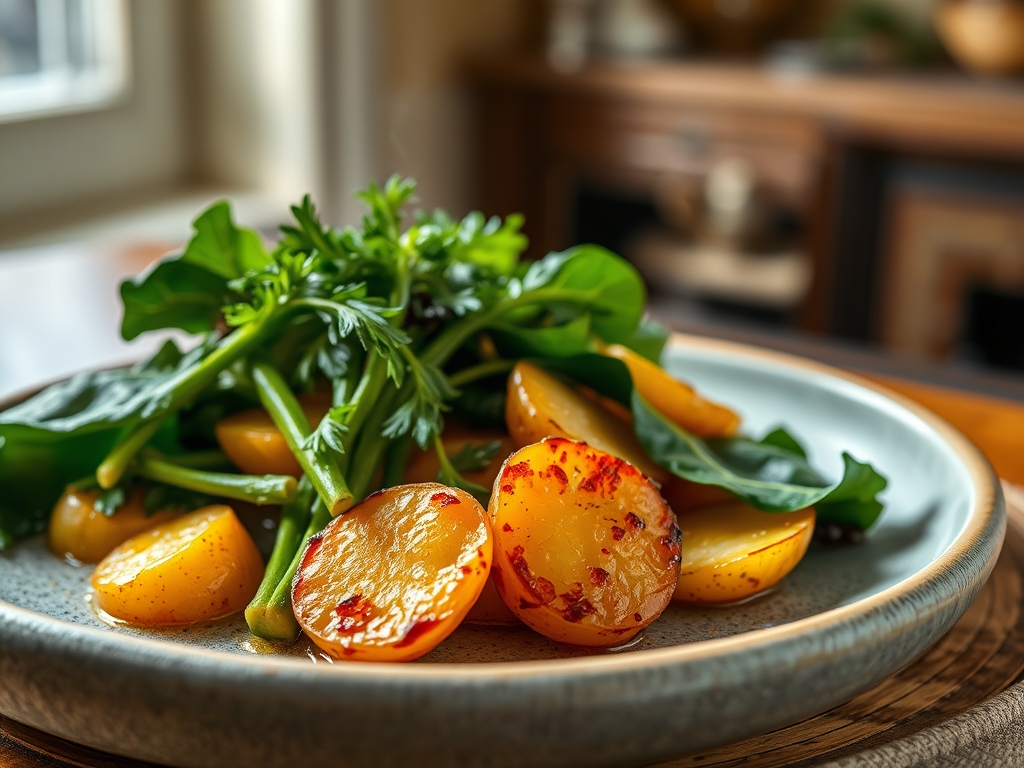
Imagine the scent of cold earth meeting searing cast iron; it is the olfactory equivalent of a warm hug on a rainy Tuesday. When you dive into the world of swiss chard and potato recipes, you are not just making dinner; you are orchestrating a textural symphony between the waxy, buttery crumb of a Yukon Gold and the mineral snap of a ruby-veined leaf. It is a pairing that feels ancient yet entirely fresh.
We often relegate greens to a side salad or bury potatoes in a heavy mash, but when they collide in a heavy-bottomed skillet, magic happens. The starch from the potatoes acts as a natural thickener for the chard's released moisture, creating a silky, almost glazed finish without the need for heavy creams. It is sophisticated, rustic, and surprisingly fast. Whether you are looking for a crispy hash, a layered gratin, or a vibrant soup, these eight variations on swiss chard and potato recipes will transform your kitchen into a high-end bistro. Let's get into the chemistry of why this works.
The Gathers:
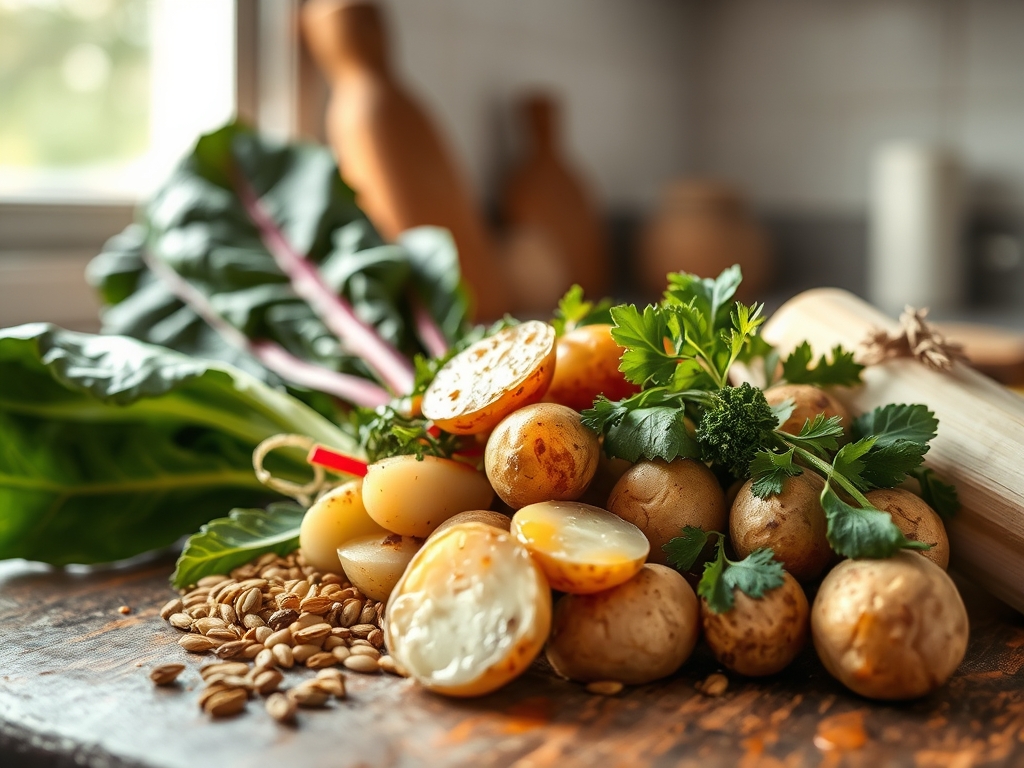
To master these swiss chard and potato recipes, your mise-en-place must be precise. We are looking for high-quality lipids and aromatics to bridge the gap between the earthy tubers and the metallic brightness of the greens.
The Foundation: Use Yukon Gold potatoes for their high starch-to-sugar ratio, which ensures a creamy interior even when the exterior is charred. For the chard, look for "Rainbow" varieties; the different pigments indicate a broader spectrum of phytochemicals and varying levels of sweetness in the stems.
The Aromatics: Fresh garlic is non-negotiable. Use a microplane to grate it into a paste for emulsions, or slice it into thin "paper" slivers with a sharp chef's knife to infuse the oil without burning. You will also need high-smoke-point fats like avocado oil or clarified butter (ghee) to achieve the Maillard reaction on the potato skins.
Smart Substitutions:
If you cannot find chard, Lacinato kale offers a similar structural integrity, though you will lose that signature beet-like sweetness. For a lower-glycemic option, swap half the potatoes for celery root (celeriac). The cellular structure is similar enough to hold up under high heat, but it provides a piquant, herbal undertone that complements the greens beautifully.
The Clock
Efficiency in the kitchen is about managing "The Chef's Flow." For most swiss chard and potato recipes, you are looking at a 15-minute prep and a 25-minute cook time. The secret to speed is the parboil technique. By partially cooking your potato cubes in salted water for five minutes before they hit the pan, you ensure the centers are fluffy while the outsides have maximum surface area for browning. While the potatoes simmer, use a bench scraper to quickly clear your board of chopped stems and leaves. This parallel processing cuts your total time in half and prevents the greens from overcooking while waiting for the tubers to soften.
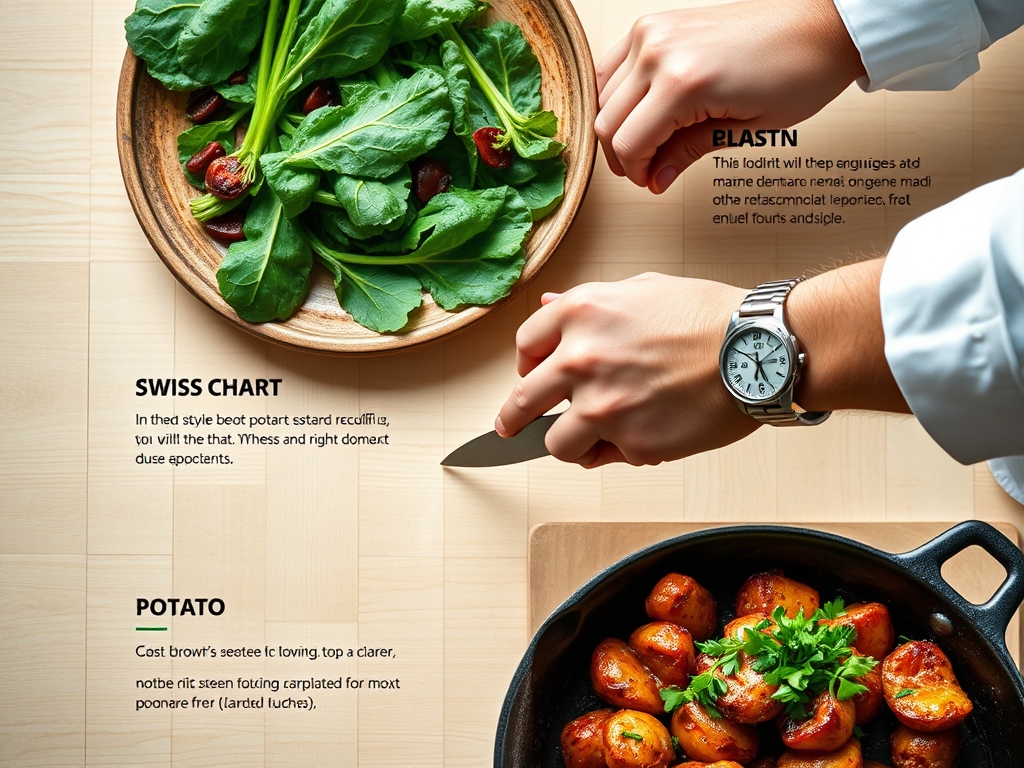
The Masterclass
1. The Thermal Prep
Start by cubing your potatoes into uniform 1/2-inch pieces. Place them in a saucier with cold, heavily salted water. Bringing them to a boil from cold ensures even heat distribution through the starch granules.
Pro Tip: This process triggers starch gelatinization. By starting in cold water, you prevent the outside from turning to mush before the heat reaches the core, resulting in a superior "bite."
2. Stem Reduction
Separate the chard leaves from the stems. Chop the stems into small dice. Because the stems are fibrous and contain more cellulose, they require a longer "render" time than the delicate leaves.
Pro Tip: Sauté the stems first with your aromatics. This allows the heat to break down the hemicellulose in the cell walls, making them tender and sweet rather than stringy.
3. The Sear
Heat a heavy-bottomed skillet (cast iron is king here) until a drop of water dances and evaporates instantly. Add your fat, then the parboiled potatoes. Do not crowd the pan; you want direct contact for the Maillard reaction.
Pro Tip: Avoid the urge to stir. Constant movement prevents the formation of a crust. Let the potatoes sit for 4 minutes to develop a deep golden hue through protein-sugar browning.
4. The Deglaze and Wilt
Once the potatoes are crispy, toss in the chard leaves. Use tongs to lift and rotate the greens, ensuring they are coated in the flavored oils. Add a splash of dry white wine or lemon juice to the pan.
Pro Tip: This is called deglazing. The acidity of the liquid releases the "fond" (browned bits) from the bottom of the pan, creating a spontaneous, viscous sauce that coats every ingredient.
The Deep Dive
Macro Nutrition: These swiss chard and potato recipes are a powerhouse of Vitamin K, Vitamin A, and Potassium. A single serving provides over 300 percent of your daily Vitamin K requirement, which is essential for bone health. The potatoes provide complex carbohydrates for sustained energy, while the chard adds a significant hit of dietary fiber.
Dietary Swaps:
- Vegan: Swap butter for a high-quality extra virgin olive oil or coconut oil. Use nutritional yeast at the very end to add a "cheesy" umami depth.
- Keto: Replace the potatoes with roasted cauliflower florets or daikon radish. The flavor profile remains remarkably similar.
- Gluten-Free: This dish is naturally gluten-free; just ensure your spices haven't been processed with flour anti-caking agents.
The Fix-It:
- Soggy Potatoes: Usually caused by overcrowding. Fix it by removing the greens and placing the potatoes under a broiler for 2 minutes to re-crisp.
- Bitter Chard: If the greens taste too "earthy," add a teaspoon of honey or balsamic glaze. The sugar balances the alkaline bitterness.
- Burnt Garlic: If your garlic turns acrid and brown, you cannot save it. Wipe the pan and start the aromatic phase over; it only takes 60 seconds and saves the whole dish.
Meal Prep & Reheating: To maintain "day-one" quality, store the potatoes and chard in an airtight glass container. When reheating, avoid the microwave, which turns potatoes gummy. Instead, use a toaster oven or a quick flash-fry in a pan with a teaspoon of water. The steam will re-hydrate the chard while the dry heat crisps the potato skins.
The Wrap-Up
Mastering swiss chard and potato recipes is like learning a secret handshake in the culinary world. It is the ultimate "fridge-raid" meal that looks like a deliberate, five-star creation. By understanding the science of starch and the delicate nature of leafy greens, you move from being a recipe-follower to a true intuitive cook. Grab your skillet, find the brightest bunch of chard at the market, and let the sizzle begin. Your kitchen is about to smell incredible.
The Kitchen Table
Can I use frozen swiss chard for these recipes?
Yes, but you must squeeze out all excess moisture first. Frozen greens have ruptured cell walls, making them more watery. Thaw them in a colander and pat dry with a paper towel before adding them to the hot potatoes to avoid steaming.
What is the best potato variety to use?
Yukon Gold is the gold standard for its creamy texture and thin skin. Russets are too floury and may fall apart, while Red Bliss potatoes are waxy enough but lack the buttery flavor profile that complements bitter greens.
How do I stop swiss chard stems from being tough?
Treat the stems like celery. Sauté them early in the process with onions and garlic. The extra time in the pan allows the heat to break down tough fibers, turning them tender and sweet before the leaves are even added.
Why does my swiss chard turn brown after cooking?
This is usually caused by overcooking or adding acid too early. Chlorophyll reacts to heat and acid by losing magnesium, turning olive-drab. To keep them vibrant green, add your lemon juice or vinegar only seconds before serving.