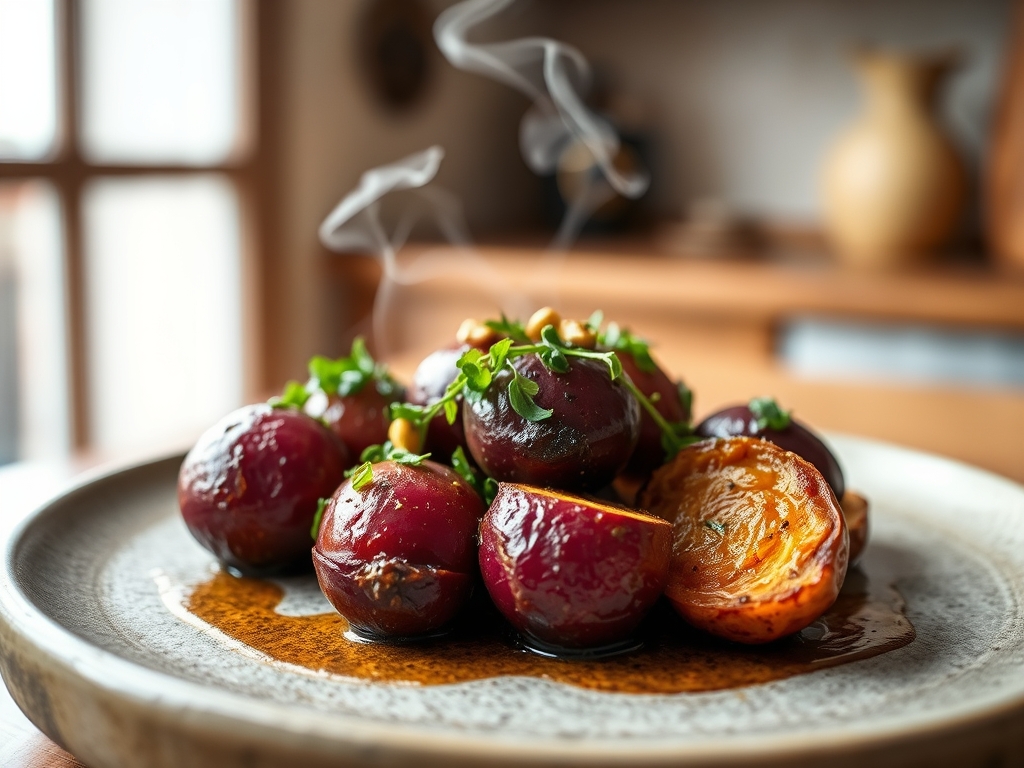
Imagine a bowl of jewels sitting on your countertop; except these gems are earthy, dusty, and waiting for a high-heat transformation. When you dive into purple potato recipes roasted to perfection, you are not just making a side dish. You are performing a botanical heist. These tubers are packed with anthocyanins, the same antioxidants found in blueberries, which give them that deep violet hue and a dense, nutty profile that puts the standard Russet to shame. The scent of roasting purple potatoes is distinct; it is more floral and grounded than a yellow gold variety. As the skins crisp up in the oven, they develop a shattered-glass texture while the interior stays creamy and velvet-like. This is the ultimate dinner party flex because the visual contrast on the plate is staggering. We are moving beyond the basic salt and pepper routine into a world where chemistry meets the sheet pan. Get your heavy-bottomed skillet and your sharpest chef knife ready because we are about to elevate the humble tuber into a masterpiece of texture and color.
The Gathers:
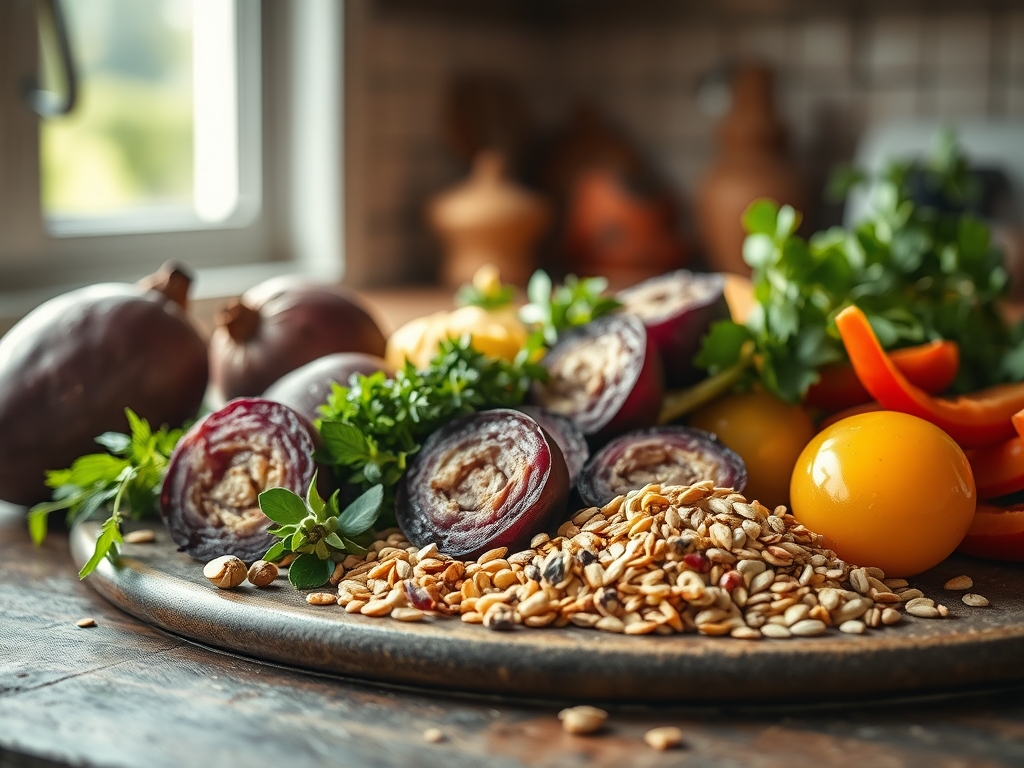
To achieve the perfect roast, your mise-en-place must be precise. Start with two pounds of Stokes Purple or Peruvian Purple potatoes. These varieties have a higher starch content than the wetter "Purple Majesty" type, which ensures a fluffier interior. You will need a high-smoke-point fat; avocado oil or clarified butter (ghee) works best to facilitate the Maillard reaction without scorching. For aromatics, gather fresh rosemary needles, three cloves of garlic, and Maldon sea salt for that specific crystalline crunch.
Smart Substitutions: If you cannot find purples, red-skinned Desiree potatoes are a fair backup for texture, though you lose the antioxidant punch. For a vegan profile, swap the ghee for a refined coconut oil to maintain a viscous mouthfeel without a coconut aftertaste. If you want to add a piquant kick, a dusting of smoked paprika or sumac after roasting adds a bright acidity that cuts through the starch. Always use a digital scale to measure your potatoes; consistency in weight leads to consistency in cook time.
The Clock:
Mastering the "Chef's Flow" is about overlapping tasks so nothing sits idle. Total active prep time is 15 minutes, with a roasting duration of 25 to 30 minutes.
Prep (0-15 mins): Wash, dry, and cube the tubers. While the oven preheats to 425 degrees Fahrenheit, infuse your oil with aromatics in a small saucier on low heat.
Roast (15-45 mins): The potatoes hit the hot pan. You will flip them exactly once at the 20-minute mark to ensure even browning.
Rest (45-50 mins): A five-minute rest period allows the internal steam to redistribute, preventing the skins from becoming leathery.
The Masterclass:
1. The Precision Cube
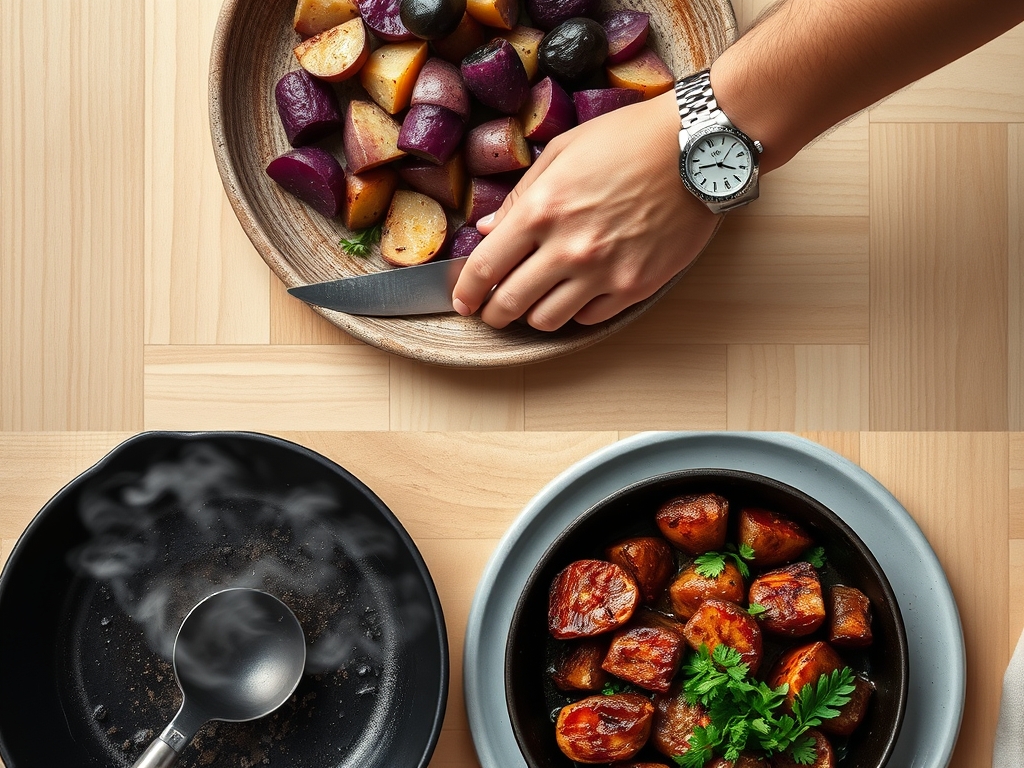
Use a bench scraper to clear your station as you dice the potatoes into uniform 1-inch cubes. Uniformity is not just for aesthetics; it ensures every piece reaches the same internal temperature simultaneously.
Pro Tip: This prevents enzymatic browning. Even though purple potatoes hide oxidation better than white ones, keeping them dry and moving quickly to the fat-coating stage preserves the vividness of the anthocyanins.
2. The Par-Boil Shortcut
Place the cubes in a pot of cold salted water and bring to a simmer for just five minutes. Drain them and give them a rough shake in the colander to scuff up the edges.
Pro Tip: This creates surface area starch slurry. Those fuzzy, mashed edges will dehydrate in the oven to create a hyper-crispy crust that a raw-to-roasted potato simply cannot match.
3. The Fat Infusion
In a small saucier, warm your oil with smashed garlic and rosemary. Do not let the garlic brown; you just want to infuse the lipid phase with fat-soluble flavor compounds.
Pro Tip: Lipids are the primary vehicle for flavor. By flavoring the oil first, you ensure every microscopic crevice of the potato is coated in aromatic essence rather than just having burnt herbs stuck to the outside.
4. The Preheated Sheet Pan
Place your empty baking sheet in the oven while it preheats. When you toss the potatoes onto the hot metal, you should hear an immediate sizzle.
Pro Tip: This initiates thermal conduction immediately. It prevents the potatoes from sticking to the pan and starts the searing process on the bottom surface before the ambient air heat even touches the top.
5. The Aeration Flip
At the twenty-minute mark, use offset tongs or a wide metal spatula to flip the potatoes. Avoid overcrowding the pan; if the potatoes are touching, they will steam instead of roast.
Pro Tip: Crowding causes moisture entrapment. You need enough space between cubes for the evaporated water to escape, allowing the dry heat to effectively render the fats and crisp the skins.
6. The Microplane Finish
Once out of the oven, immediately zest a fresh lemon over the hot potatoes using a microplane. The residual heat will release the citrus oils without cooking out the bright flavor.
Pro Tip: This utilizes volatile aromatic compounds. The heat of the potato acts as a diffuser, sending the lemon scent upward to hit the diner's nose before they even take the first bite.
The Deep Dive:
Macro Nutrition: Purple potatoes are a nutritional powerhouse. One medium potato contains about 150 calories, 3 grams of protein, and 4 grams of fiber. Their glycemic index is lower than a Russet, meaning they provide a slower, more sustained release of energy.
Dietary Swaps:
- Vegan: Use extra virgin olive oil and skip the parmesan finish.
- Keto: While potatoes are high-carb, you can mimic this recipe using purple cauliflower florets for a similar visual effect with 70 percent fewer carbs.
- GF: This recipe is naturally gluten-free; just ensure your spices are certified.
The Fix-It:
- Soggy Potatoes: Your oven temp was too low or the pan was crowded. Fix it by cranking the heat to 450 for the last five minutes.
- Burnt Garlic: You added the garlic too early. Fix it by adding minced garlic only in the last 10 minutes of roasting next time.
- Dull Color: Overcooking can grey out the purple. Fix it by adding a splash of vinegar or lemon juice; the acidity stabilizes the purple pigments.
Meal Prep: To reheat, avoid the microwave at all costs; it turns the starch into a gummy mess. Use an air fryer at 375 degrees for four minutes or a heavy-bottomed skillet with a teaspoon of oil to restore the "day-one" crunch.
The Wrap-Up:
You are now officially the master of the most vibrant side dish in the culinary world. Purple potato recipes roasted with this level of scientific intent are more than just food; they are a conversation starter. Remember that the key lies in the contrast between that jagged, crispy exterior and the pillowy, violet center. Don't be afraid to experiment with different fat sources or herb blends. Whether you are serving these alongside a seared ribeye or a bright spring salad, the purple potato is your ticket to a high-end dining experience right in your own kitchen. Now, go grab that sheet pan and start roasting!
The Kitchen Table:
Why are my purple potatoes turning green?
This usually happens due to an alkaline environment. Purple potatoes contain pH-sensitive pigments. To fix this, add a small amount of acid, like lemon juice or vinegar, to your seasoning mix to keep them vibrantly purple.
Do I need to peel purple potatoes before roasting?
No, the skin is where many nutrients live. It also provides a necessary structural barrier that crisps up beautifully. Just scrub them well with a vegetable brush to remove any lingering soil before slicing.
Can I roast these at the same time as other vegetables?
Yes, but be mindful of density. Purple potatoes are denser than zucchini or bell peppers. Start the potatoes fifteen minutes earlier than softer vegetables so everything finishes at the same time on the same tray.
Are purple potatoes healthier than regular white potatoes?
Yes, they contain significantly more antioxidants, specifically anthocyanins. These compounds are linked to lower blood pressure and reduced inflammation. They also have a slightly lower glycemic index, which is better for blood sugar stability.