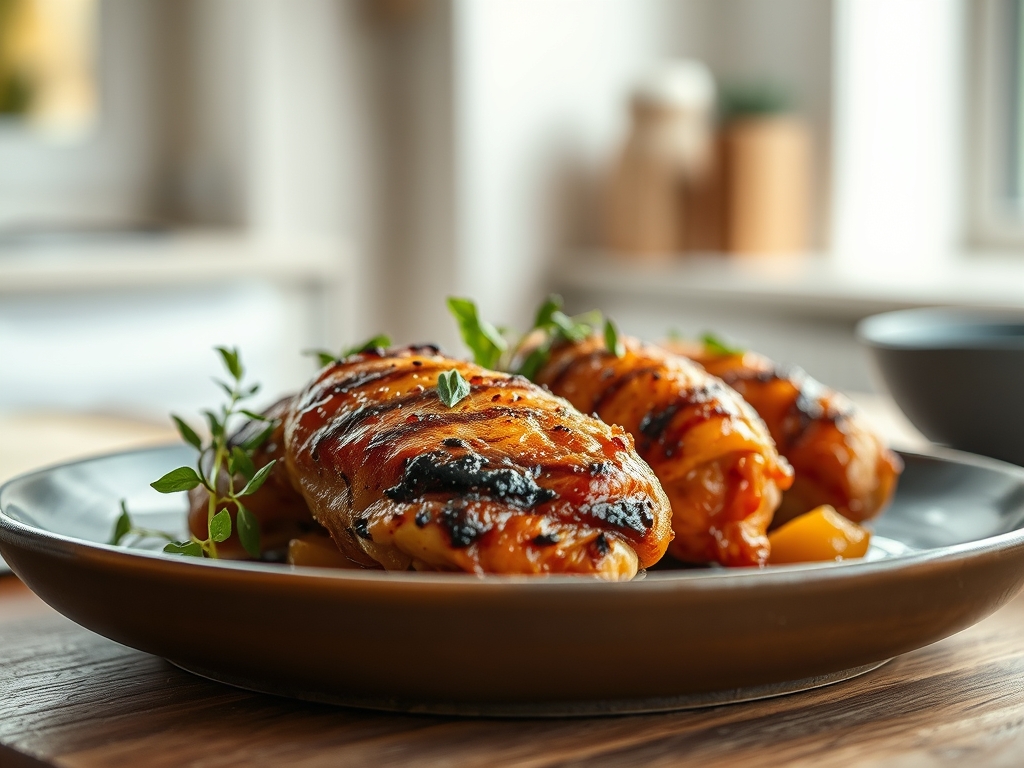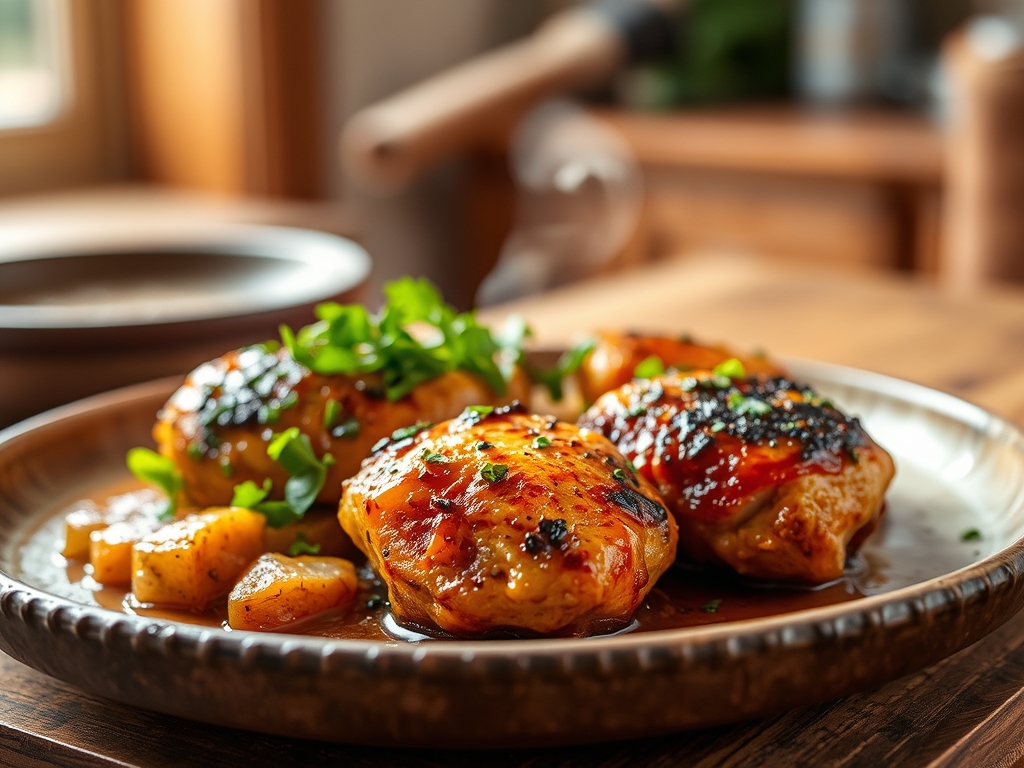
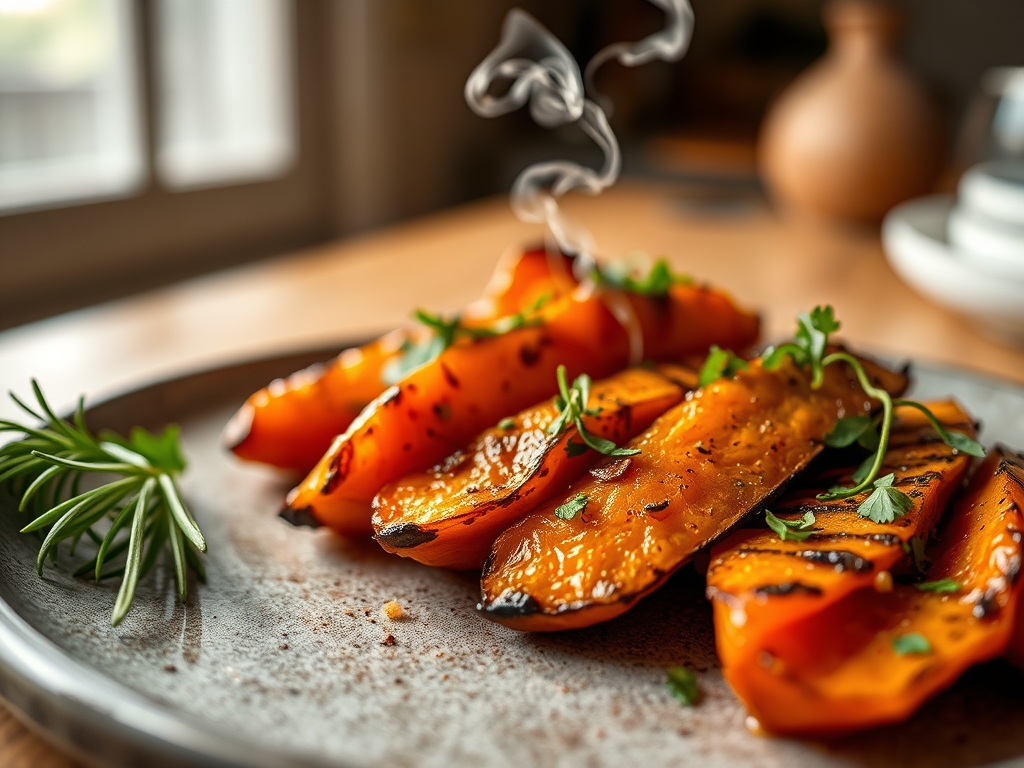
Picture a kitchen bathed in golden afternoon light where the air carries a heavy, caramel scent laced with the sharp, woody fragrance of fresh rosemary. You are standing over a sheet pan, listening to that rhythmic, high-pitched hiss as cold oil hits a hot surface. This is the sensory gateway to the ultimate savory roasted sweet potato recipes. We are moving far away from the cloying, marshmallow-topped casseroles of the past. Instead, we are chasing the Maillard reaction, that chemical transformation where amino acids and reducing sugars create a complex, umami-rich crust. When you achieve that perfect balance of a salt-forward exterior and a custard-like center, you have mastered one of the most versatile side dishes in the culinary canon. We are going to treat these tubers like fine proteins, focusing on structural integrity and flavor infusion to turn a humble root vegetable into a sophisticated, savory masterpiece that commands attention at any dinner table.
The Gathers:
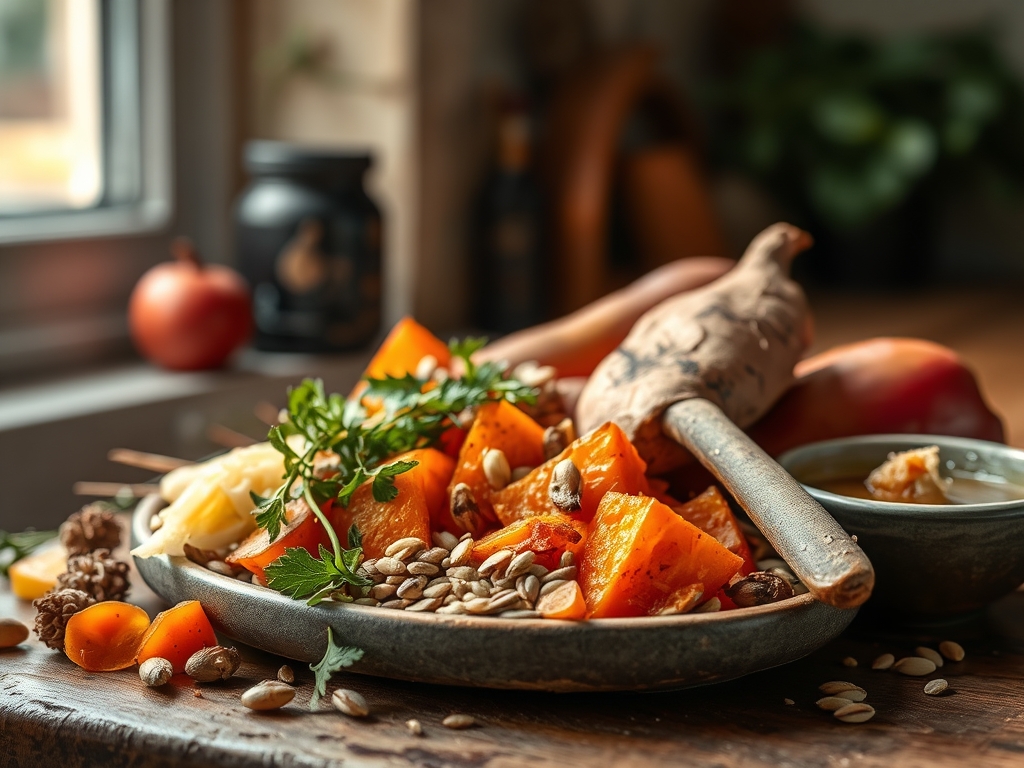
To execute these savory roasted sweet potato recipes with precision, your mise-en-place must be meticulous. Start with high-starch Beauregard or Jewel sweet potatoes; their moisture content allows for a fluffy interior while the skins are thin enough to crisp beautifully. You will need a high-smoke-point lipid like avocado oil or clarified butter (ghee) to withstand the high thermal energy of the oven without oxidizing.
For the aromatics, gather fresh thyme, woody rosemary, and whole garlic cloves still in their papery skins. The science here involves lipid-soluble flavor infusion, where the volatile oils of the herbs migrate into the fat during the roasting process. You will also need flaky sea salt for textural contrast and freshly cracked tellicherry peppercorns for a piquant bite.
Smart Substitutions: If you are avoiding nightshades, swap the traditional paprika for ground sumac to maintain a vibrant red hue and a tart, citrusy finish. If you lack fresh herbs, use a microplane to zest a lemon over the finished dish; the citric acid will brighten the earthy notes of the potato just as effectively as fresh greens.
The Clock
Efficiency in the kitchen is about "Chef's Flow," the art of overlapping tasks to minimize downtime. Expect a total active prep time of 15 minutes and a passive roasting time of 35 to 45 minutes.
The flow begins with the oven preheat. This is non-negotiable. You need a saturated heat environment before the potatoes ever touch the pan. While the oven climbs to 425 degrees Fahrenheit, you will use a sharp chef's knife or a bench scraper to manage your workspace. Your goal is to have the potatoes chopped and seasoned the exact moment the oven chime sounds. This prevents the potatoes from oxidizing and turning gray, a process known as enzymatic browning. By the time you have cleaned your cutting board, the potatoes will be halfway through their transformation, leaving you ten minutes at the end for the final seasoning and plating.
The Masterclass
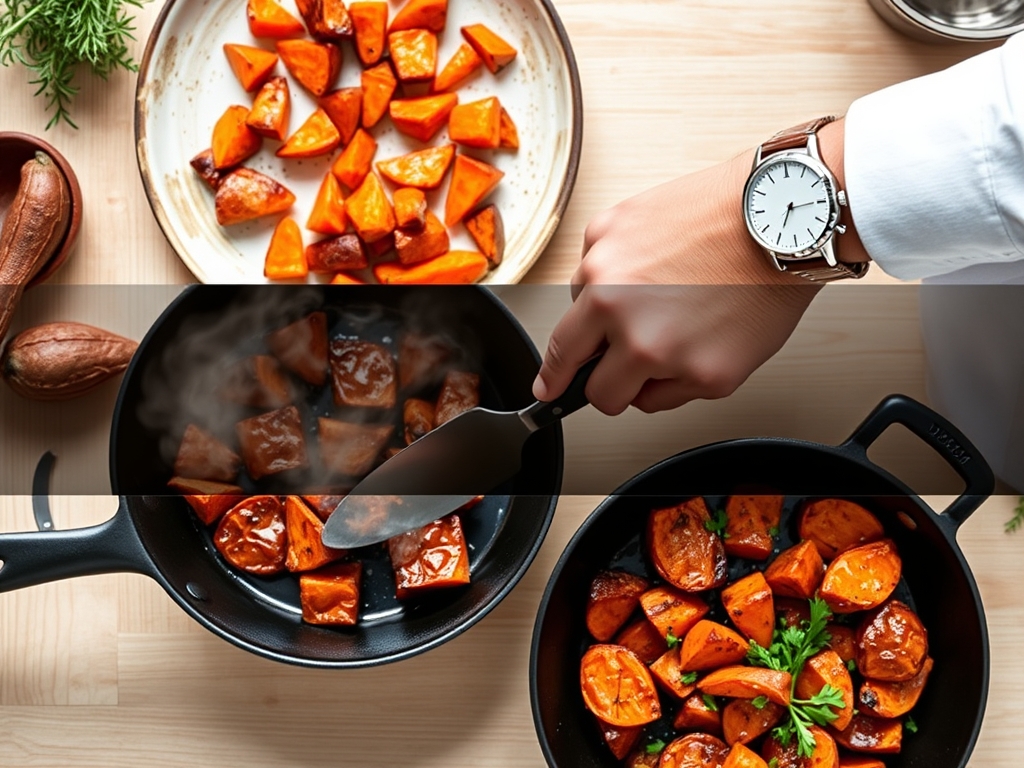
1. The Precision Cut
Use a heavy-bottomed knife to slice the potatoes into uniform 1-inch cubes. Uniformity is not just for aesthetics; it ensures that every piece has the same surface-area-to-volume ratio, meaning they will all reach the ideal internal temperature simultaneously.
Pro Tip: This is about thermal equilibrium. If pieces vary in size, the small ones will carbonize before the large ones lose their raw, starchy crunch.
2. The Dry Brine
Toss the cubes in a large stainless steel bowl with your oil and salt. Ensure every surface is viscous with a thin layer of fat. This layer acts as a heat conductor, transferring the oven's energy more efficiently into the vegetable.
Pro Tip: Salt draws out moisture through osmosis. By salting right before roasting, you create a slight surface brine that helps the skin dehydrate and crisp up faster once it hits the heat.
3. The Preheated Pan Method
Place your empty baking sheet in the oven for five minutes before adding the potatoes. When you finally spread the potatoes out, you should hear a loud sizzle. Use tongs to ensure no two pieces are touching.
Pro Tip: This utilizes conduction. Starting on a hot surface initiates the searing process immediately, preventing the bottom of the potato from becoming soggy as it releases steam.
4. The Aromatics Infusion
Halfway through the roasting time, toss in your smashed garlic cloves and herb sprigs. Use a saucier or a small spoon to baste any collected oil over the herbs to help them render their flavors into the pan.
Pro Tip: Adding herbs too early causes them to incinerate. Adding them at the midpoint allows for essential oil extraction without the bitter notes of burnt cellulose.
5. The Agitation Phase
Use a metal spatula to aggressively flip the potatoes at the 30-minute mark. You want to expose the pale sides to the direct heat of the pan to maximize the Maillard reaction across all surfaces.
Pro Tip: This promotes evaporative cooling on the top surface while the bottom continues to brown, resulting in a more complex flavor profile and a sturdier crust.
6. The Carryover Rest
Once the potatoes are deep amber and tender, remove the pan from the oven. Let them sit on the hot tray for five minutes before serving.
Pro Tip: This accounts for thermal carryover. The internal residual heat continues to cook the center to a buttery consistency while the exterior air-dries, becoming even crunchier.
The Deep Dive
From a macro nutrition perspective, savory roasted sweet potato recipes are a powerhouse of complex carbohydrates and Vitamin A. One cup provides nearly 400 percent of your daily recommended intake of beta-carotene. Because we are using healthy fats for roasting, these fat-soluble vitamins are more easily absorbed by your body.
Dietary Swaps: For a Vegan version, stick with avocado oil or coconut oil. For a Keto-adjacent modification, reduce the portion size and pair with high-fiber greens to blunt the glycemic response. All versions are naturally Gluten-Free.
The Fix-It:
- Soggy Potatoes: Usually caused by overcrowding. Use two pans to ensure proper airflow.
- Burnt Edges/Raw Centers: Your oven temperature is too high. Drop it by 25 degrees and use a digital scale to ensure your cuts are consistent.
- Bland Flavor: You likely under-salted. Add a splash of apple cider vinegar or a squeeze of lime at the end to deglaze the palate and enhance the savory notes.
Meal Prep: To reheat, avoid the microwave at all costs; it turns the starch into a gummy mess. Instead, use an air fryer or a heavy-bottomed skillet for three minutes to re-crisp the exterior and maintain that "day-one" structural integrity.
The Wrap-Up
Mastering savory roasted sweet potato recipes is truly a gateway skill that elevates your entire culinary game. By understanding the science of heat transfer and the importance of surface area, you transform a simple root vegetable into a sophisticated side dish. Remember to respect the preheat, embrace the sizzle, and never crowd the pan. Now, take these secrets, grab your favorite herbs, and go create something absolutely delicious. Your kitchen is waiting!
The Kitchen Table
Why are my roasted sweet potatoes always mushy?
Mushiness usually stems from overcrowding the pan, which traps steam. To fix this, ensure each cube has space for airflow. This allows moisture to evaporate, enabling the Maillard reaction to create a crisp, caramelized exterior.
Do I need to peel sweet potatoes before roasting?
Peeling is optional. The skin contains significant fiber and becomes pleasantly crisp when roasted. If you keep the skin, scrub the tubers thoroughly with a vegetable brush to remove any grit before slicing for your savory roasted sweet potato recipes.
What is the best temperature for roasting sweet potatoes?
The sweet spot is 425 degrees Fahrenheit. This high heat is necessary to caramelize the natural sugars quickly while ensuring the interior stays fluffy. Lower temperatures often result in a steamed texture rather than a roasted one.
Can I use dried herbs instead of fresh?
Yes, but add them at the beginning with the oil. Dried herbs need time to rehydrate in the fat to release their flavor. Use one-third the amount of dried herbs compared to fresh to avoid an overpowering, medicinal taste.